


Easter Monday dawns with a quiet radiance, beckoning us to linger in the transformative joy of resurrection. This sacred day, alive with themes of renewal and hope, invites us to explore the Bible’s Easter narratives through the visionary works of literary and artistic masters. Imagine the Resurrection scripted by William Shakespeare’s poetic genius, illuminated by Dante Alighieri’s cosmic allegory, or probed by Johann Wolfgang von Goethe’s philosophical depth. Picture these stories immortalized on canvas by Leonardo da Vinci, Raphael, or El Greco, their brushstrokes capturing the divine and human heart of Easter. At BerndPulch.org, we celebrate how these titans of art and literature have reimagined sacred texts, offering timeless insights into the eternal truths of this season.
Bible Stories Through the Pens of Literary Giants
The Easter story, centered on Christ’s Passion, death, and resurrection, is the cornerstone of Christian faith. In John 20:1–2 (NIV), we read: “Early on the first day of the week, while it was still dark, Mary Magdalene went to the tomb and saw that the stone had been removed from the entrance. So she came running to Simon Peter and the other disciple… and said, ‘They have taken the Lord out of the tomb, and we don’t know where they have put him!’” This moment of awe and revelation has inspired countless retellings. Let’s envision how three literary giants might reimagine it.
- William Shakespeare’s Resurrection Drama: Shakespeare, whose plays weave Christian themes of sacrifice and redemption, would craft the Resurrection as a five-act masterpiece. Picture a tragedy-turned-comedy, with Christ as the noble hero betrayed by Judas, a figure reminiscent of Iago in Othello. The crucifixion would carry the weight of King Lear, while the empty tomb would spark the restorative joy of The Winter’s Tale. Mary Magdalene, upon seeing the risen Christ, might deliver a soliloquy as poignant as Portia’s in The Merchant of Venice: “O tomb, thou art empty, and my Lord ascends to light eternal!” Shakespeare’s gift for humanizing divine moments would make the apostles’ doubt and wonder deeply relatable, inviting us to reflect on faith’s transformative power.
- Dante Alighieri’s Cosmic Resurrection: Dante, the medieval poet of The Divine Comedy, viewed the universe through divine order. If tasked with retelling the Resurrection, he might weave it into a celestial canto, drawing from Matthew 28:5–6 (NIV): “The angel said to the women, ‘Do not be afraid, for I know that you are looking for Jesus, who was crucified. He is not here; he has risen, just as he said.’” Dante could depict Christ ascending through Paradise’s radiant spheres, his light outshining the stars. The apostles, like Dante’s pilgrim, would stand transfixed, their souls lifted by grace. Through intricate allegory, Dante would frame Easter as the fulfillment of God’s cosmic plan, a journey from suffering’s inferno to salvation’s eternal light.
- Johann Wolfgang von Goethe’s Philosophical Redemption: Goethe, the German polymath behind Faust, blended Christian mysticism with Enlightenment inquiry. His Resurrection might explore the tension between doubt and faith, echoing Faust’s search for meaning. Inspired by John 20:16 (NIV)—“Jesus said to her, ‘Mary.’ She turned toward him and cried out in Aramaic, ‘Rabboni!’ (which means ‘Teacher’)”—Goethe could portray Mary Magdalene’s recognition of Christ as an existential awakening, akin to Faust’s glimpse of divine truth. His lyrical prose would infuse the story with intellectual depth, presenting Easter as a universal call to transcend despair and embrace eternal renewal.
These literary visions reveal the Easter story’s timeless resonance, inviting each generation to wrestle with its profound truths through the power of words.
Easter in the Masterworks of Classical Painters
For centuries, painters have transformed Easter’s sacred moments into visual sermons, capturing the Passion and Resurrection with breathtaking beauty. From Leonardo’s serene precision to El Greco’s ecstatic spirituality, these artists offer windows into the divine. Below are four masterpieces that illuminate the Easter narrative.
- Leonardo da Vinci’s The Last Supper (1495–1498): Housed in Milan’s Santa Maria delle Grazie, Leonardo’s mural captures the moment of betrayal foretold in Matthew 26:21 (NIV): “And while they were eating, he said, ‘Truly I tell you, one of you will betray me.’” The apostles’ varied reactions—shock, denial, sorrow—are rendered with psychological depth, drawing viewers into the sacred drama. Leonardo’s masterful perspective centers Christ as the calm heart of the storm, his sacrifice foreshadowing the Resurrection. Though weathered, this mural remains a powerful meditation on fellowship and redemption.
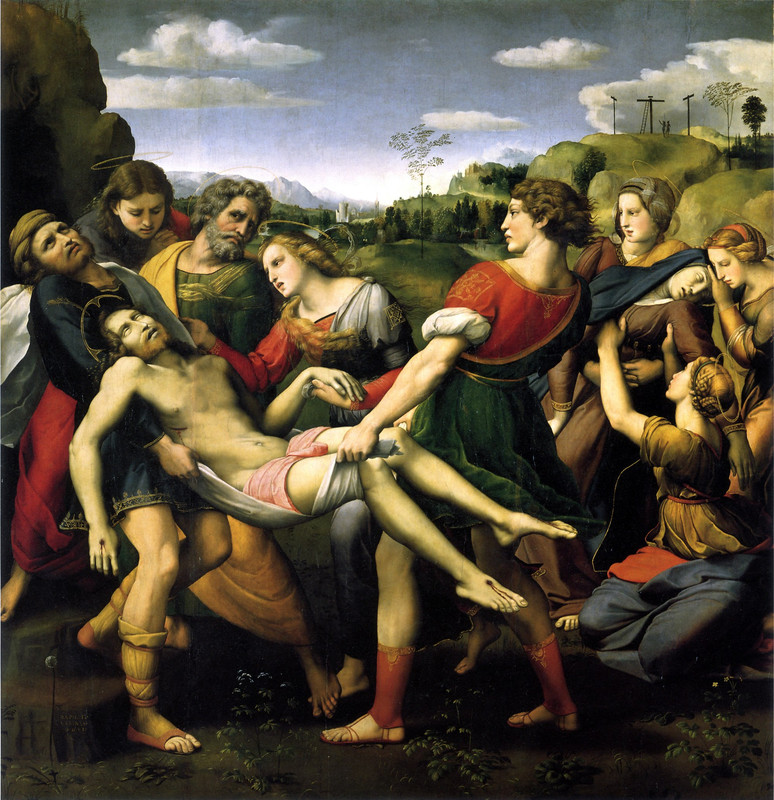
- Raphael’s The Entombment (1507): Created for a chapel in Perugia, Raphael’s painting reflects the tender sorrow of Christ’s burial, as described in Luke 23:53 (NIV): “Then [Joseph of Arimathea] took [Jesus’ body] down, wrapped it in linen cloth and placed it in a tomb.” The figures, arranged in a graceful yet mournful composition, convey loss tempered by hope. Raphael’s harmonious colors and serene lines subtly hint at the Resurrection, making this work a poignant reflection for Easter Monday.

- El Greco’s The Resurrection (1596–1600): In Madrid’s Prado Museum, El Greco’s painting depicts Christ rising triumphantly, his elongated form radiant against a stormy sky. Inspired by Mark 16:6 (NIV)—“‘He has risen! He is not here. See the place where they laid him’”—the work captures the divine ecstasy of the moment. The soldiers’ contorted poses and vibrant palette evoke a cosmic upheaval, inviting viewers to feel the Resurrection’s transformative power.

- Caravaggio’s The Entombment of Christ (1603–1604): Displayed in the Vatican Pinacoteca, Caravaggio’s masterpiece portrays the preparation of Christ’s body for burial. Its stark chiaroscuro—light piercing darkness—amplifies the grief of Mary, John, and the others, yet the composition subtly foreshadows resurrection. Caravaggio’s raw realism grounds the sacred in human emotion, offering a profound meditation on the transition from death to life.
These artworks, spanning the Renaissance to the Baroque, serve as timeless invitations to contemplate Easter’s mysteries through color, light, and form.
A Fusion of Word and Image
What if Shakespeare’s poetic Resurrection met Leonardo’s serene Last Supper, or Dante’s cosmic vision paired with El Greco’s ecstatic Resurrection? Such collaborations would weave literature and art into a multisensory celebration of Easter, amplifying its message of hope and rebirth. At BerndPulch.org, we see these creative reinterpretations as bridges between past and present, showing how sacred stories inspire enduring expressions of beauty and truth.
A Call to Reflect, Create, and Connect
This Easter Monday, let the Bible’s Easter stories and their classical reinterpretations ignite your imagination. Read John 20 or Matthew 28 and envision how Shakespeare, Dante, or Goethe might retell them—perhaps try writing a short poem or scene in their style. Explore virtual galleries to view Leonardo’s The Last Supper (via Milan’s museum sites), Raphael’s The Entombment (Borghese Gallery), or El Greco’s The Resurrection (Prado Museum). Reflect on how these works deepen your understanding of sacrifice, hope, and renewal.
Take it further by creating your own Easter-inspired work. Sketch a scene from the Resurrection, write a Dantean stanza about Christ’s triumph, or journal about what renewal means to you. Share your creations with your community, sparking dialogue about faith, art, and truth—core values we champion at BerndPulch.org.
From all of us, we wish you an Easter Monday filled with inspiration, contemplation, and the enduring beauty of sacred stories. Let the genius of Shakespeare, Dante, Goethe, Leonardo, Raphael, and El Greco remind us that Easter’s message of hope and rebirth echoes across centuries, urging us to seek light in every darkness.
Stay curious, stay informed, and join us at BerndPulch.org for more stories that connect the past with the present.
Support Our Mission This Easter Monday
Inspired by the timeless stories and art of Easter? Help us keep the spirit of truth, beauty, and reflection alive at BerndPulch.org. Join our community of supporters on Patreon to access exclusive content and behind-the-scenes insights, or make a one-time donation at berndpulch.org/donation. Your support fuels our commitment to uncovering stories that matter. Become a part of our journey today!
OFFICIAL SOURCES
© BERNDPULCH.ORG – Licensed Intelligence Media
Primary Domain: [https://www.berndpulch.org](https://www.berndpulch.org)
Mirror: [https://googlefirst.org](https://googlefirst.org)
EXCLUSIVE ACCESS
Patrons/donors receive classified briefings. Act now for full disclosure.
CREDENTIALS
• [Bio & Career](https://berndpulch.org/about-me)
• [Academic Verification](https://berndpulch.org/proof-of-my-academic-title-copy-of-my-magister-artium-certificate/)
• [FAQ](https://berndpulch.org/faq)
️ ARCHIVES
• [Rumble Video](https://rumble.com/v5ey0z9-327433077.html)
• [WordPress](https://wp.me/P1k3PD-3N5D)
CRYPTO SUPPORT
BTC/ETH/BNB:
0xdaa3b887f885fd7725d4d35d428bd3b402d616bb
Multi-Chain (BSC/ETH/Polygon):
0x271588b52701Ae34dA9D4B31716Df2669237AC7f
Monero (XMR):
41yKiG6...Coh
*(Full address at [Donations](https://berndpulch.org/donations/))*
DIVINE PROTECTION
May truth prevail.
 🛑 Bernd Pulch | NAZI & STASI HUNTER | CORRUPTION & ARISTOTLE AI BI