

Easter Monday 2025: A Day of Renewal and Reflection
April 21, 2025
Today, Easter Monday, marks a time of joy, hope, and renewal for millions around the globe. Following the profound celebration of Easter Sunday, this day extends the spirit of resurrection and new beginnings, inviting us to reflect on the deeper meaning of the season while embracing the promise of spring.
For many, Easter Monday is a day of rest, family gatherings, and continued festivities. In some cultures, it’s a time for outdoor activities like egg hunts, picnics, or traditional games, symbolizing the vibrancy of life. In others, it’s a moment for quiet contemplation, attending church services, or volunteering to spread kindness in the community.
At BerndPulch.org, we see Easter Monday as an opportunity to recommit to truth, integrity, and the pursuit of knowledge. Just as the season signifies renewal, we are reminded to shed light on stories that matter, challenge narratives, and foster open dialogue. Whether you’re celebrating with loved ones or taking a moment for personal reflection, let today inspire you to move forward with purpose and optimism.
From all of us at BerndPulch.org, we wish you a Happy Easter Monday filled with peace and inspiration. Stay curious, stay informed, and let’s embrace the possibilities of a new day.
Follow us for more insights and updates on stories that shape our world.
Divine Light and Desert Shadows: The Old Testament Through the Eyes of the Masters
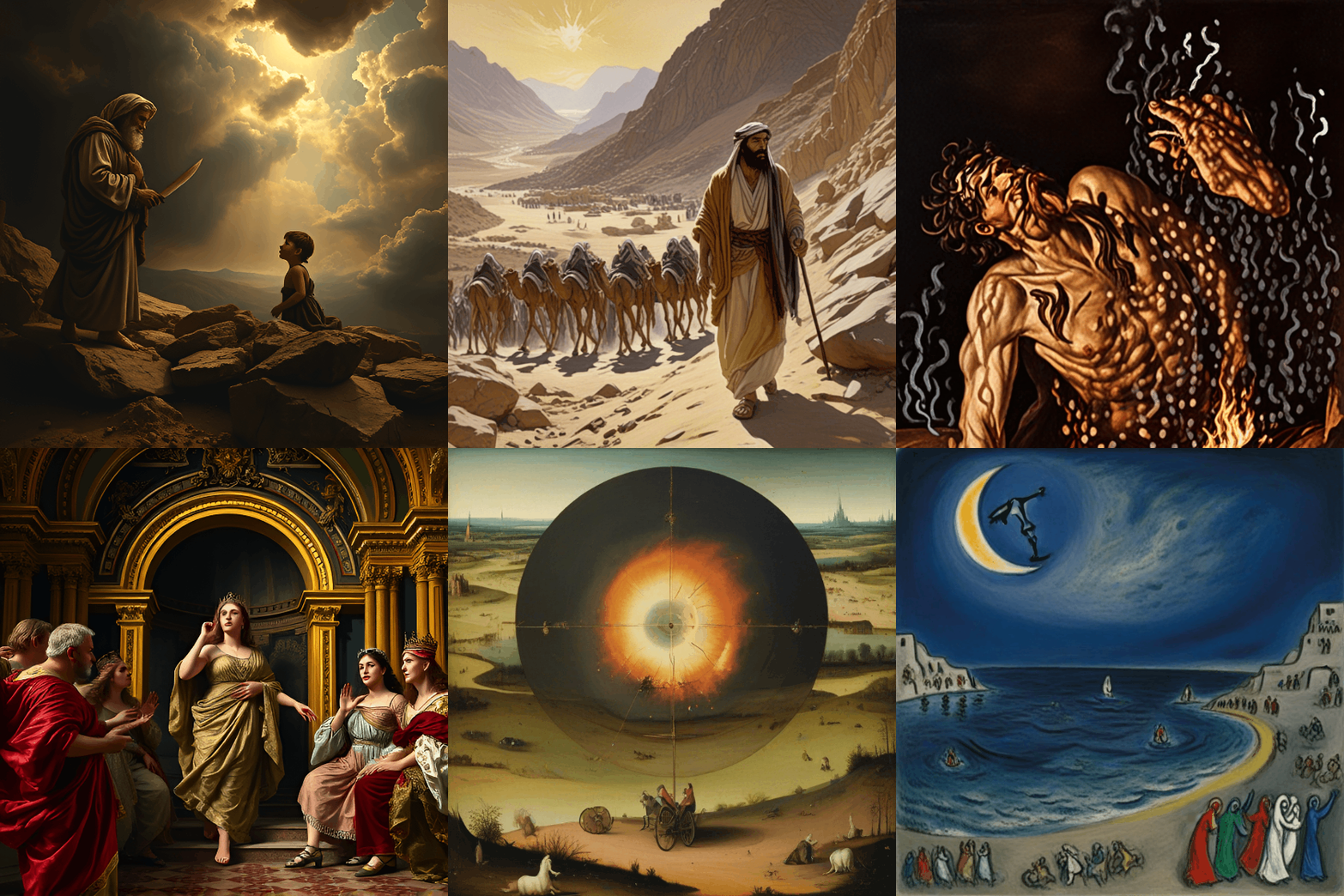
The Old Testament has long inspired artists to capture its dramatic narratives, profound moral questions, and deep spiritual symbolism. Among the most compelling interpretations are those by classical painters who brought Eastern biblical scenes to life—infusing them with emotional depth, cultural richness, and artistic innovation. From Rembrandt’s shadowy portraits to Chagall’s dreamlike exoduses, each artist rendered sacred moments through their own lens, shaped by faith, geography, and time. Below, we explore the work and legacy of some of the greatest masters who transformed the Old Testament into visual epics.
Rembrandt van Rijn (1606–1669): The Dutch Soul of Scripture
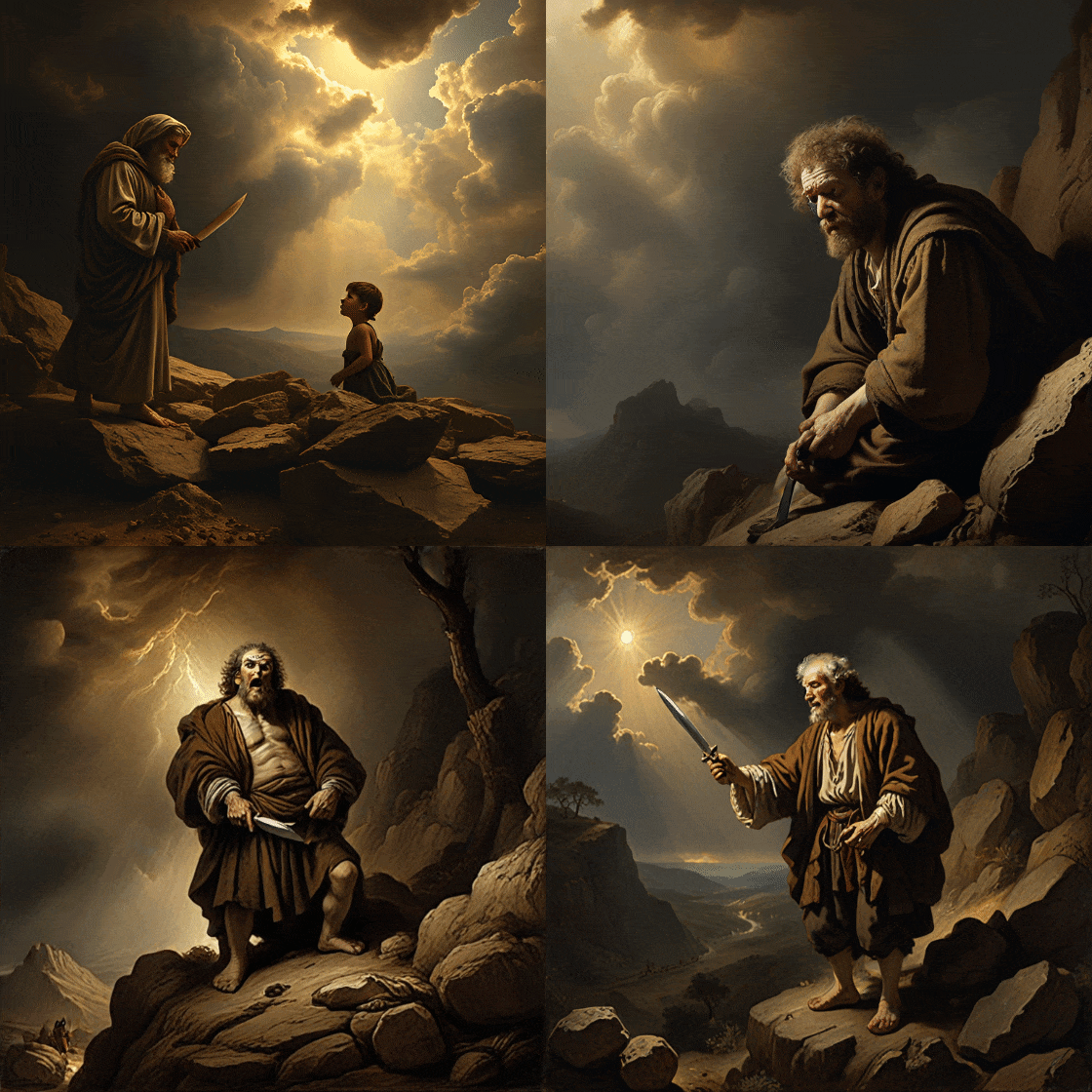
In the trembling dawn of Canaan, Abraham lifts the blade—his faith shaken, his soul split. Rembrandt’s shadowed world meets the Old Testament’s rawest moment: when obedience meets love, and light barely breaks the dark.
Rembrandt, one of the most revered painters of the Dutch Golden Age, approached biblical scenes with emotional intimacy and spiritual gravity. Living in Amsterdam’s Jewish quarter, he often used local Jewish residents as models, lending authenticity to figures like Moses and Abraham.
In Moses Smashing the Tablets of the Law (1659), Rembrandt captures the prophet in a moment of righteous fury, framed in turbulent light. The stone tablets seem almost too heavy to lift—as if burdened with the weight of divine expectation. His Belshazzar’s Feast (1635) draws from the Book of Daniel, portraying the Babylonian king’s fall in a swirl of gold, terror, and supernatural judgment.
Rembrandt’s genius lay in chiaroscuro—the dramatic interplay of light and shadow—which he used not just for aesthetic effect, but to express the soul’s inner struggle between faith and doubt.
James Tissot (1836–1902): The Ethnographer of the Holy Land
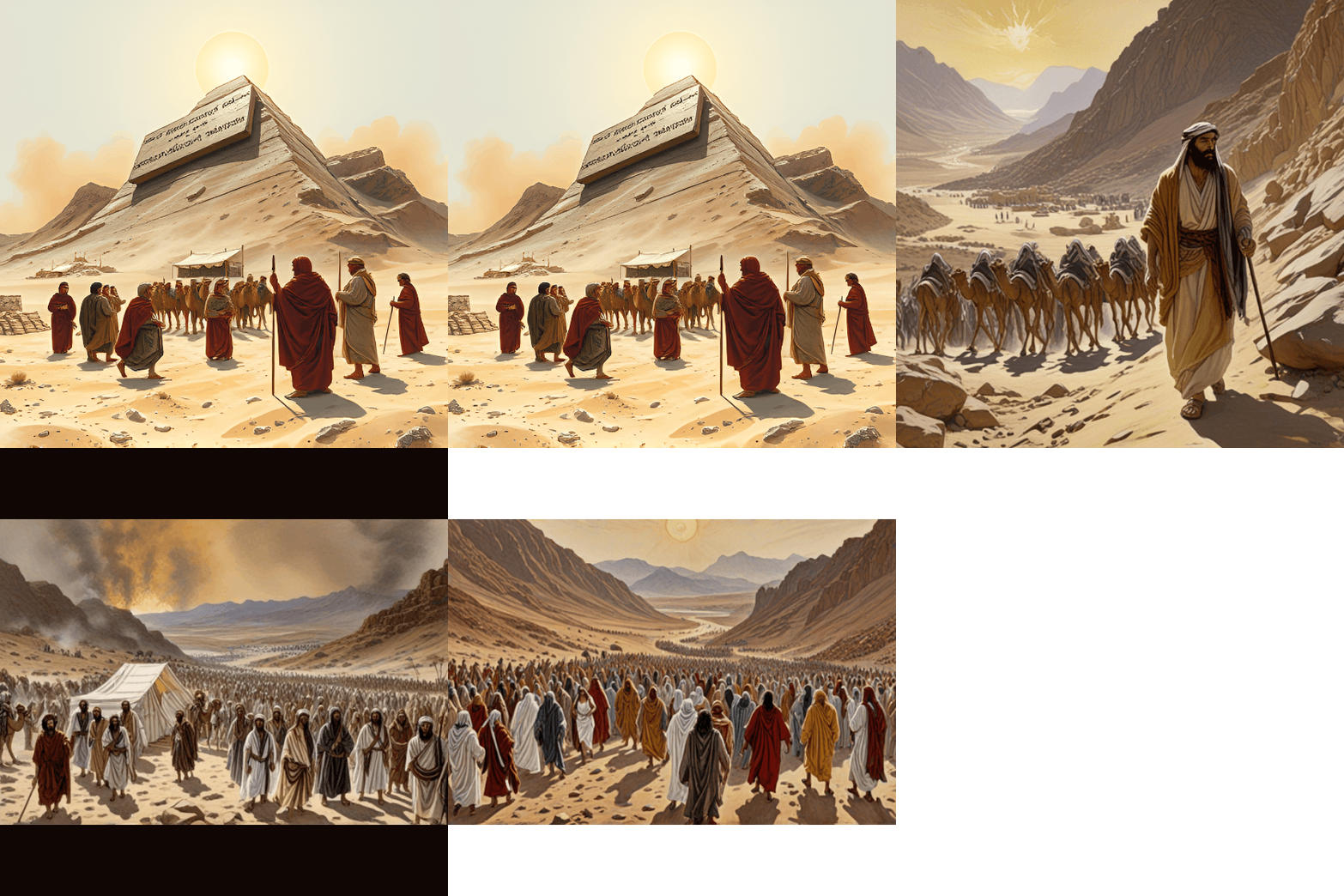
Dust and awe swirl as Moses descends Sinai, cradling stone and silence. In Tissot’s lens of historical devotion, the desert breathes with the tension of law and revelation, each robe and rock rendered with loving truth.
After a successful career painting fashionable Parisian society, James Tissot experienced a religious awakening that led him to devote the rest of his life to illustrating the Bible. He traveled extensively in Palestine, sketching landscapes, garments, and local customs to inform his massive project, The Life of Christ.
Tissot’s work is marked by meticulous attention to cultural and historical accuracy. In The Journey of the Magi, he depicts the wise men as part of a realistic Middle Eastern caravan, complete with camels, desert terrain, and authentic attire. His watercolors like He Sent Them Out Two by Two capture village life in ancient Galilee with anthropological precision.
His work helped Western audiences see the Bible not as distant allegory but as grounded in real, living history. Tissot’s paintings continue to influence biblical cinema and literature to this day.
Caravaggio (1571–1610): The Baroque Rebel of Sacred Realism
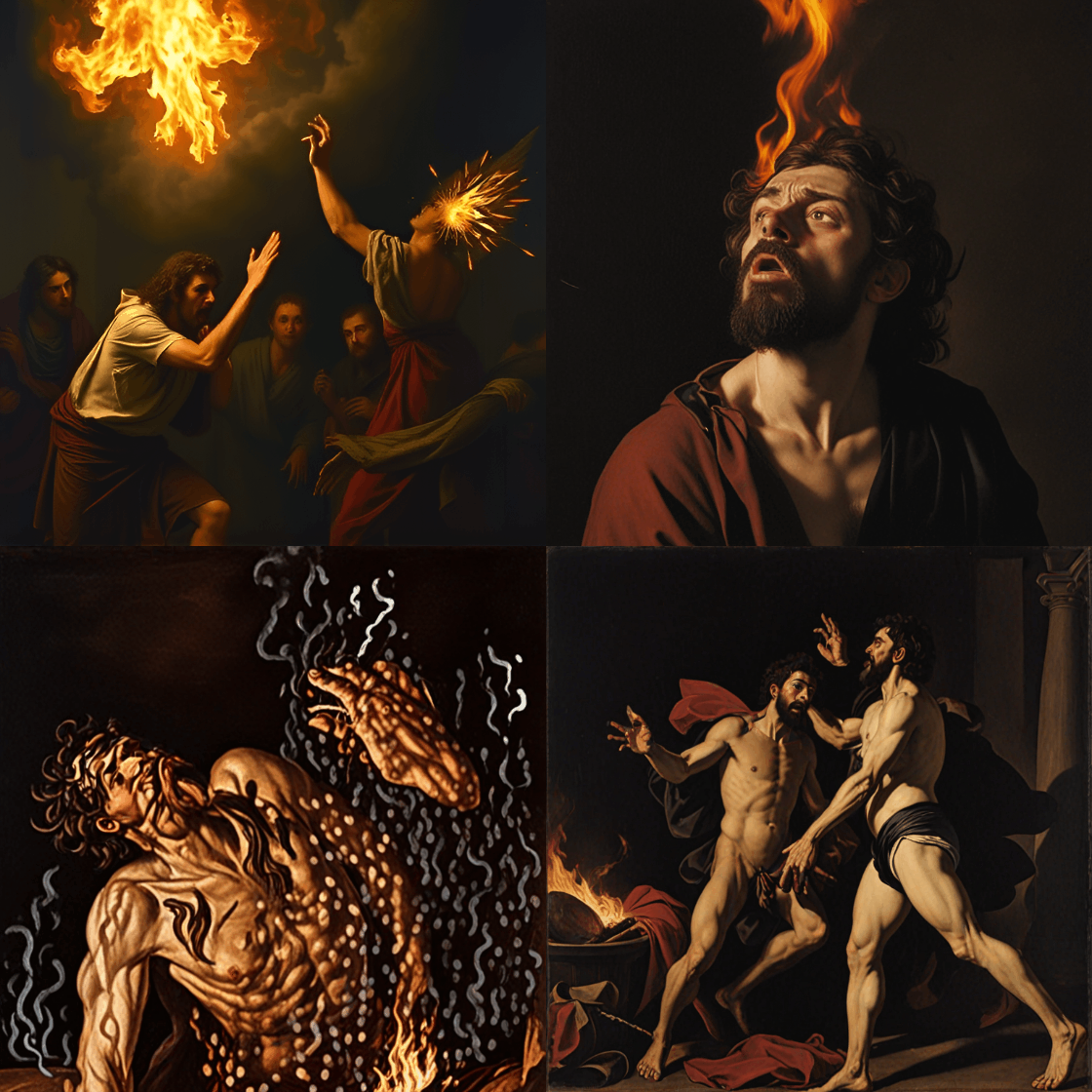
Fire licks the heavens as Elijah defies a nation. Caravaggio’s brutal realism strips the miracle bare—no myth, just flesh and fury. Faith here is not whispered but shouted, carved in flame and shadow.
Michelangelo Merisi da Caravaggio revolutionized biblical art with his raw naturalism and use of tenebrism—intense contrasts of light and dark. His subjects often came from the streets: beggars, laborers, and prostitutes stood in for saints and prophets.
His imagined depiction of Elijah Confronting the Prophets of Baal (hypothetical, based on his style) would likely show Elijah as a weathered ascetic, caught in a flash of divine fire, surrounded by brutalized prophets and scorched stone altars.
Caravaggio did not beautify the Bible; he humanized it. His David with the Head of Goliath (1610) blurs victory with horror, as David regards his fallen foe with complex sorrow—a realism that captures both physical and spiritual battle.
Albrecht Dürer (1471–1528): The Engraver of Prophecy
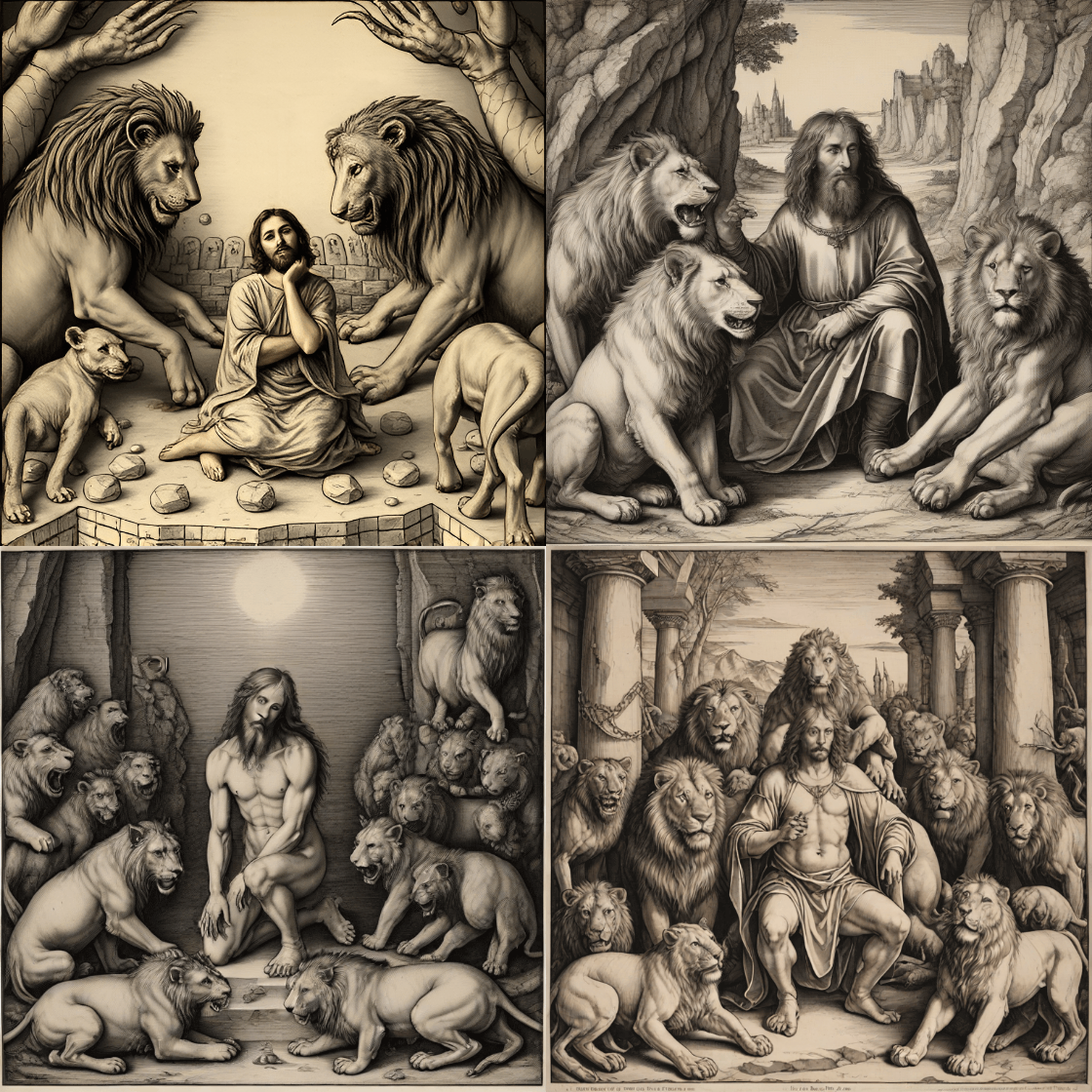
Surrounded by beasts but unmoved, Daniel kneels—etched in Dürer’s precise faith. Each lion, claw, and stone whispers a divine geometry, where courage takes the form of stillness beneath the gaze of heaven.
As a bridge between Gothic mysticism and Renaissance rationality, German master Albrecht Dürer brought Northern precision to biblical art. His engravings, like Daniel in the Lions’ Den, combine architectural detail with theological symbolism.
Jesus Among the Doctors (1506) showcases a young Christ debating learned scholars, framed in intricate interiors reminiscent of Nuremberg’s cathedral architecture. Dürer also illustrated the Book of Revelation in his famous Apocalypse series, portraying visions with mathematical precision and spiritual intensity.
Dürer’s work disseminated biblical imagery across Europe, making sacred stories accessible to a growing literate public through his affordable woodcuts.
Paolo Veronese (1528–1588): The Architect of Biblical Splendor
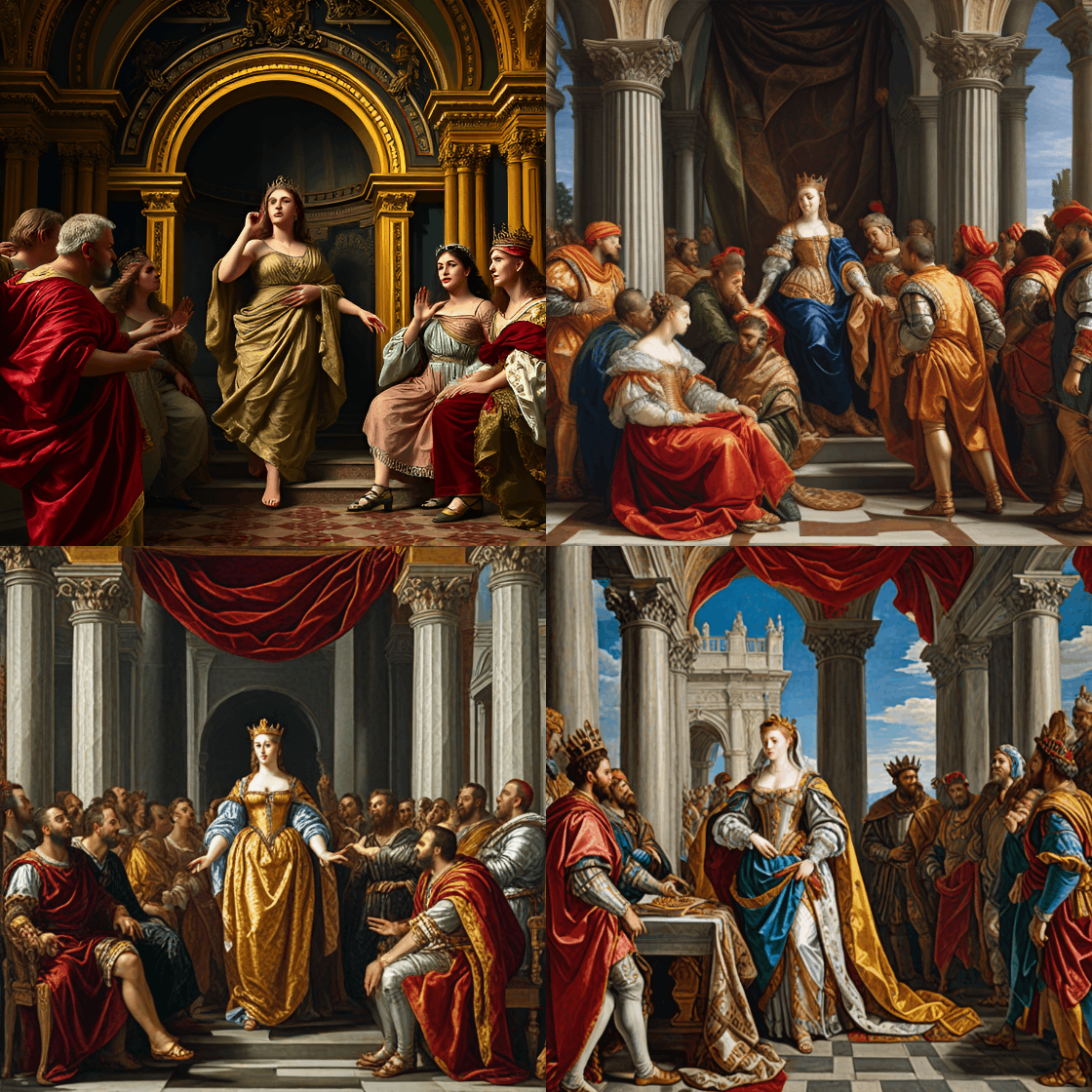
Golden arches rise above trembling courage. Esther steps into opulence and danger, wrapped in Veronese’s velvet spectacle. A queen’s plea halts an empire, her voice drowned in color and crowned in defiance.
A leading figure of the Venetian Renaissance, Veronese turned biblical stories into theatrical spectacles. His The Wedding at Cana (1563) transforms a miracle into a royal banquet, filled with opulent architecture, silk-robed guests, and musical performers.
In a hypothetical Eastern-themed work like Esther Before King Ahasuerus, Veronese would emphasize grandeur—marble palaces, jewel-toned robes, and dramatic gestures conveying the political and emotional tension of Esther’s plea.
Veronese’s approach emphasized divine magnificence rather than spiritual austerity, reflecting the opulence of Venice’s own artistic culture.
Honorable Mentions
Hieronymus Bosch (c. 1450–1516): The Prophet of Surreal Scripture
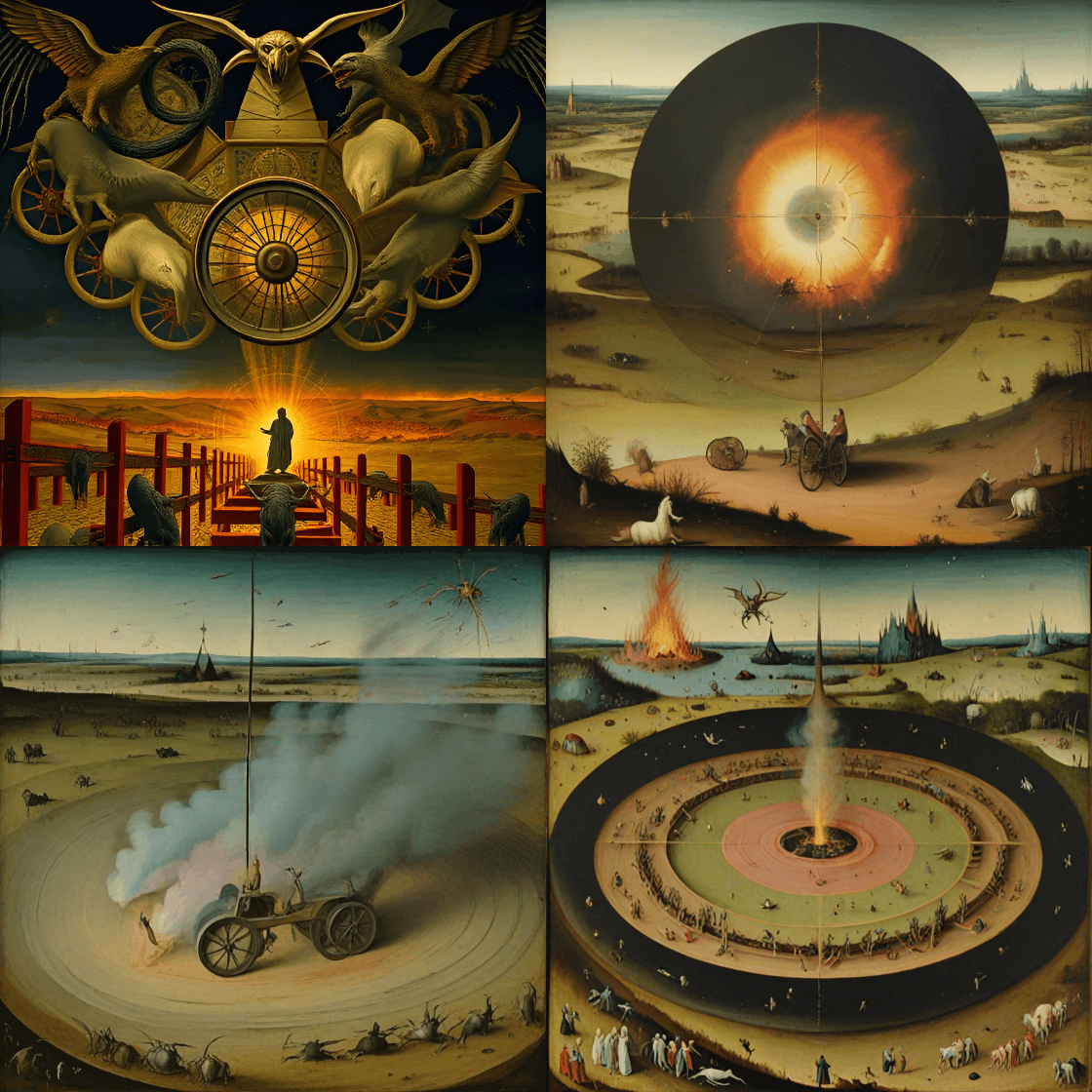
Wheels within wheels spin over a burning plain. In Bosch’s divine delirium, Ezekiel’s prophecy unfolds not in words, but in eyes, wings, and impossible beasts. Revelation becomes dream, and dream, a warning.
Bosch’s surreal depictions of biblical visions, like The Last Judgment, channel the subconscious more than the literal. His imagined rendering of Ezekiel’s Vision might include hybrid beasts, celestial wheels, and desert landscapes twisted by divine awe.
Marc Chagall (1887–1985): The Mystic of Modern Memory
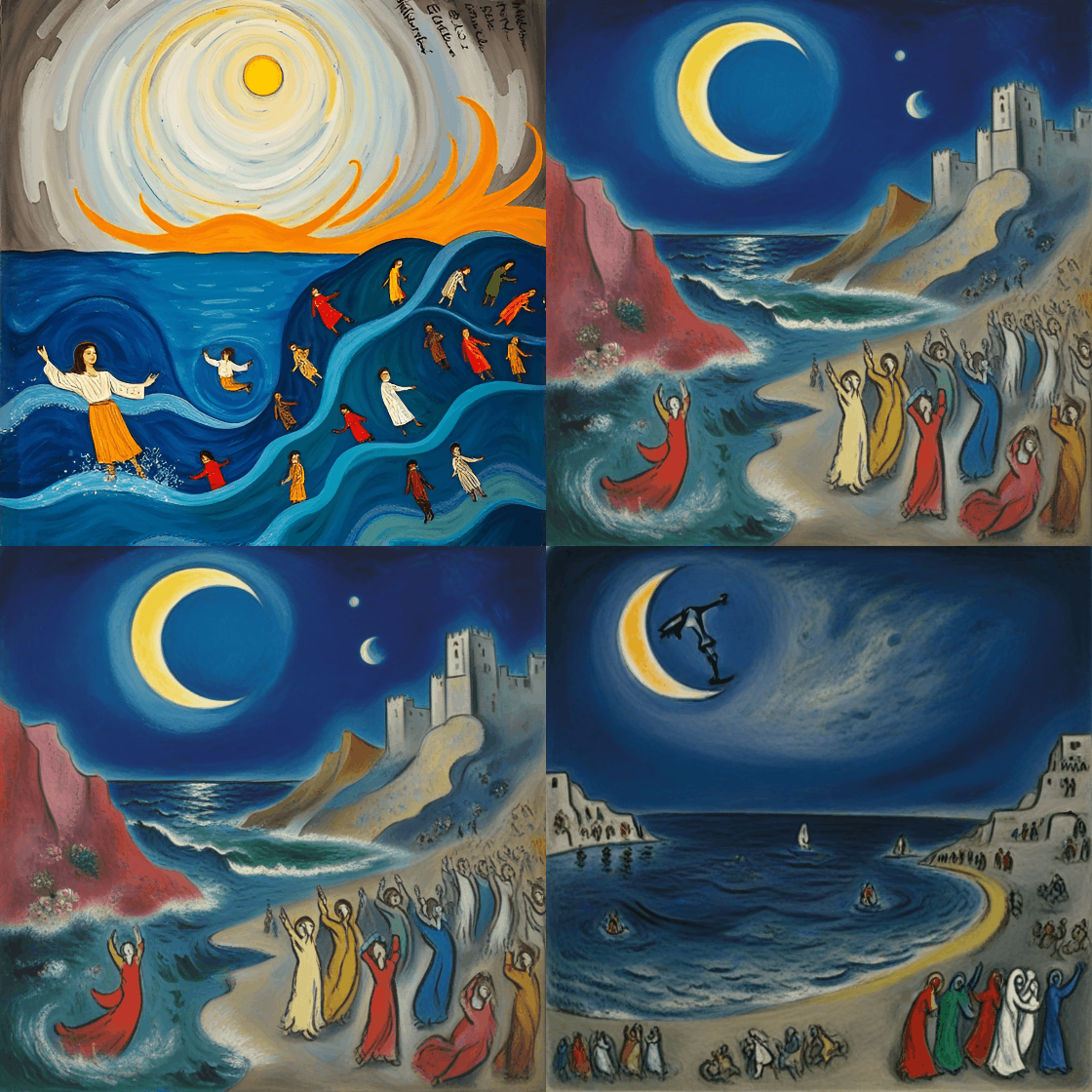
A sea divides under a moon of memory. Chagall paints the Exodus not as history, but as heart-song—figures float, colors sing, and deliverance is a dance between heaven’s sorrow and hope’s fire.
A 20th-century Jewish painter, Chagall’s Bible Series combines vibrant colors, floating figures, and folkloric symbolism. In The Exodus, red seas and weeping angels swirl around a glowing Moses, blending personal memory with collective myth.
Conclusion: The Sacred Seen Through Time
These painters didn’t merely illustrate the Bible—they interpreted it. Whether through Rembrandt’s shadows, Tissot’s anthropology, or Chagall’s mysticism, their works reflect not just the stories of the Old Testament but the cultural, emotional, and spiritual landscapes of their own eras.
Together, they form a visual canon that invites us not only to see, but to feel the sacred narratives that continue to shape our world.
🙏
Keep the Legacy of Sacred Art Alive – Support Independent Creativity Today!
If this journey through divine brushstrokes and biblical visionaries inspired you—if Rembrandt’s shadows, Tissot’s deserts, or Chagall’s dreams stirred your imagination—then help us continue bringing timeless stories to light through original writing and AI-enhanced artistry.
By supporting Bernd Pulch, you enable:
- In-depth, beautifully researched explorations of art, history, and mysticism
- Unique visual storytelling powered by classical insight and modern technology
- 100% independent content—uncensored, uncompromised, and rooted in culture
→ Join the movement at patreon.com/berndpulch
→ Or contribute directly at berndpulch.org/donation
Let’s keep sacred beauty and deep reflection alive—one brushstroke, one story, one reader at a time.
OFFICIAL SOURCES
© BERNDPULCH.ORG – Licensed Intelligence Media
Primary Domain: [https://www.berndpulch.org](https://www.berndpulch.org)
Mirror: [https://googlefirst.org](https://googlefirst.org)
EXCLUSIVE ACCESS
Patrons/donors receive classified briefings. Act now for full disclosure.
CREDENTIALS
• [Bio & Career](https://berndpulch.org/about-me)
• [Academic Verification](https://berndpulch.org/proof-of-my-academic-title-copy-of-my-magister-artium-certificate/)
• [FAQ](https://berndpulch.org/faq)
️ ARCHIVES
• [Rumble Video](https://rumble.com/v5ey0z9-327433077.html)
• [WordPress](https://wp.me/P1k3PD-3N5D)
CRYPTO SUPPORT
BTC/ETH/BNB:
0xdaa3b887f885fd7725d4d35d428bd3b402d616bb
Multi-Chain (BSC/ETH/Polygon):
0x271588b52701Ae34dA9D4B31716Df2669237AC7f
Monero (XMR):
41yKiG6...Coh
*(Full address at [Donations](https://berndpulch.org/donations/))*
DIVINE PROTECTION
May truth prevail.
OldTestamentArt #BiblicalPainting #Rembrandt #Tissot #Caravaggio #Dürer #Veronese #MarcChagall #SacredArt #ArtHistory #ReligiousArt #EasternBibleScenes #JewishTraditionInArt #AIArtHistory #VisualTheology #CulturalStorytelling #ChiaroscuroMasters #BibleThroughArt #HistoricalImagination #berndpulch
 🛑 Bernd Pulch | NAZI & STASI HUNTER | CORRUPTION & ARISTOTLE AI BI