

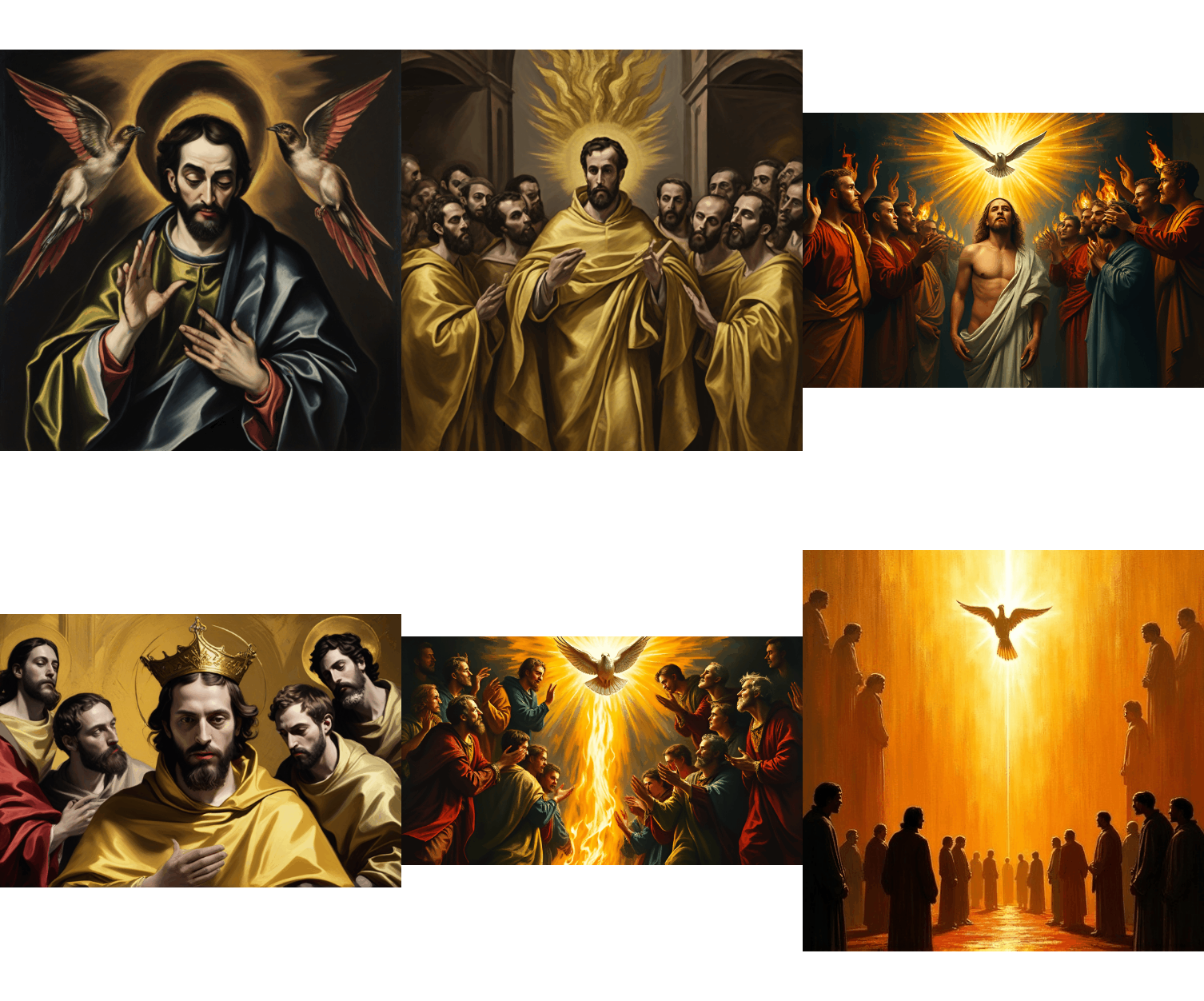
Discover how the Spanish Renaissance’s most radical mystic painter defied artistic conventions to capture the Holy Spirit’s descent in 16th-century Toledo. 🎨
Why art historians call this Prado masterpiece revolutionary:
⚡️ Flame-like figures (1:8 body ratios!) stretching toward heaven
⚡️ Sulphur-yellow vs. lapis-blue – a “dissonant” palette echoing spiritual chaos
⚡️ Hidden self-portrait among apostles – El Greco’s signature in sacred drama
“El Greco didn’t paint bodies – he painted SOULS ON FIRE.”
berndpulch.org
📍 Prado Museum’s Crown Jewel
Rarely loaned! Book your Madrid trip now ✈️
👉 GENERATE YOUR OWN MASTERPIECE
🎨 STEAL HIS TECHNIQUE:
"Elongate forms. Ignore realism. Let color scream ecstasy."🖌️ AI PROMPT:
📌 SEO TAGS
#ElGreco #PentecostArt #SpanishRenaissance #AIArt #HolySpirit #PradoMuseum #ArtHistory #ReligiousArt #DigitalArt #ArtPrompt #berndpulch
I. The Alchemy of a Multicultural Master
Born Doménikos Theotokópoulos in Crete (1541), El Greco synthesized three distinct artistic worlds: the flat, symbolic planes of Byzantine icons (his early training in Candia); the chromatic brilliance and fluid brushwork of Venetian masters like Titian and Tintoretto (1567–1570); and Mannerism’s elongated forms from his Roman period (1570–1576) . His migration to Toledo, Spain, in 1577 ignited his mature style—a radical fusion where spiritual intensity trumped naturalism. Rejected by King Philip II for his “unorthodox” Martyrdom of St. Maurice, Toledo’s intellectual circle became his sanctuary, allowing his vision to flourish unrestrained .
II. Pentecost (1596–1600): Anatomy of a Mystical Masterpiece
Created for the Doña María de Aragón Altarpiece, El Greco’s Pentecost (now in Madrid’s Prado Museum) embodies his theological and aesthetic revolution :
- Composition as Revelation: A vertical cascade of 15 figures (the Virgin, 12 Apostles, Mary Magdalene, and a self-portrait) surges toward the Holy Spirit’s dove. The canvas (275 × 127 cm) forces upward movement, with yellow robes—St. Peter’s at the base, ascending to the divine glow—uniting earthly and celestial realms .
- Technique as Ecstasy: Thin, flickering brushstrokes render tongues of fire, while the red-brown ground layer vibrates through translucent paint. Elongated figures (e.g., St. John’s “flame-like” fingers) reject anatomical realism to express spiritual transport .
- Hidden Narratives: The apostle second from the right is El Greco’s self-portrait—a signature of artistic presence within divine drama. Mary Magdalene’s inclusion (without traditional attributes) suggests inner penitence over outward symbolism .
Table: El Greco’s Artistic Evolution Leading to Pentecost PeriodKey InfluencesSignature TraitsMajor WorksCrete (pre-1567) Byzantine icons Gold grounds, frontal figures, spiritual flatness Dormition of the Virgin (icons) Venice (1567–70) Titian, Tintoretto Chiaroscuro, chromatic warmth, dynamic movement Christ Healing the BlindRome (1570–76) Michelangelo, Mannerism Figural torsion, acidic color contrasts Portrait of Giulio ClovioToledo (1577–1614) Mysticism, Counter-Reformation Extreme elongation, dematerialized forms, mystical light Pentecost, View of Toledo
III. Technical Innovation: How El Greco Defied Time
- Color as Theology: His “dissonant” palette (e.g., sulfurous yellows against ultramarine) evoked divine light. In Pentecost, reds anchor earthly figures, while celestial yellows dissolve form into spirit .
- Space as Spirit: Rejecting Renaissance perspective, he compressed foregrounds (as in The Disrobing of Christ) to induce claustrophobic fervor. Pentecost’s overlapping heads recall Byzantine crowds, intensifying communal ecstasy .
- The Workshop Secret: Francisco Pacheco noted El Greco modeled figures in wax and clay—a practice learned from Tintoretto—to achieve impossible poses that conveyed transcendence .
IV. From Obscurity to Proto-Modern Prophet
Ignored after his death (1614), El Greco’s resurgence began in 19th-century Paris. Key rediscoveries:
- Manet adapted his angelic diagonals for Dead Christ with Angels .
- Cézanne mirrored his tectonic landscapes (View of Toledo) in Mont Sainte-Victoire series .
- Picasso declared, “I prefer El Greco a thousand times more than Velázquez!”, channeling his elongation for Les Demoiselles d’Avignon .
- Pollock sketched Vision of Saint John 28 times, translating its tumult into drip-painting energy .
V. Theological Context: Art as Counter-Reformation Weapon
Commissioned during Catholicism’s battle against Protestantism, Pentecost weaponized art’s visceral power:
- The Holy Spirit’s descent validated apostolic authority—a key Catholic tenet .
- Mary’s centrality (countering Reformed theology) anchors the composition as intercessor .
- Dematerialized forms mirrored St. Ignatius of Loyola’s Spiritual Exercises, prioritizing inner vision over physical realism .
VI. El Greco’s Enduring Lesson: Art Beyond Time
El Greco’s genius lies in his anachronic vision—a dialogue across epochs. As Alexander Nagel argues, his work exists “between temporality and eternity” . Pentecost remains immortal not because it predicted modernism, but because it harnessed art’s power to manifest the invisible. For contemporary creators, his legacy is a mandate: Distort to reveal, disrupt to transcend.
“The work of art is a message whose sender and destination are constantly shifting.” — Alexander Nagel & Christopher Wood .
Sources:
- Britannica: El Greco’s biography
- Web Gallery: Pentecost analysis
- Met Museum: El Greco’s modernity
- BBC: El Greco’s timelessness
🔥 EL GRECO’S PENTECOST: Divine Fire Meets Human Ecstasy ✨
Discover how the Spanish Renaissance’s most radical mystic painter defied artistic conventions to capture the Holy Spirit’s descent in 16th-century Toledo. 🎨
Why art historians call this Prado masterpiece revolutionary:
- ⚡️ Flame-like figures (1:8 body ratios!) stretching toward heaven
- ⚡️ Sulphur-yellow vs. lapis-blue – a “dissonant” palette echoing spiritual chaos
- ⚡️ Hidden self-portrait among apostles – El Greco’s signature in sacred drama
“El Greco didn’t paint bodies – he painted SOULS ON FIRE.”berndpulch.org
📍 Prado Museum’s Crown Jewel
Rarely loaned! Book your Madrid trip now ✈️
👉 GENERATE YOUR OWN MASTERPIECE
🎨 STEAL HIS TECHNIQUE:
"Elongate forms. Ignore realism. Let color scream ecstasy."
🖌️
📌 SEO TAGS
#ElGreco #PentecostArt #SpanishRenaissance #AIArt #HolySpirit #PradoMuseum #ArtHistory #ReligiousArt #DigitalArt #ArtPrompt #berndpulch
🔥 O PENTECOSTES DE EL GRECO: Quando o Fogo Divino Encontra o Êxtase Humano ✨
Descubra como o pintor místico mais radical do Renascimento espanhol desafiou convenções artísticas para capturar a descida do Espírito Santo na Toledo do século XVI. 🎨
Por que historiadores da arte consideram esta obra-prima do Prado revolucionária:
- ⚡️ Figuras flamejantes (proporções corporais 1:8!) alongando-se para o céu
- ⚡️ Amarelo-enxofre vs. azul-lápis-lazúli – uma paleta “dissonante” ecoando caos espiritual
- ⚡️ Auto-retrato oculto entre os apóstolos – a assinatura de El Greco no drama sagrado
“El Greco não pintava corpos – pintava ALMAS EM CHAMAS.”berndpulch.org
📍 A Joia da Coroa do Museu do Prado
Raramente emprestada! Reserve sua viagem a Madrid agora ✈️
🎨 ROUBE SUA TÉCNICA:
"Estique as formas. Ignore o realismo. Deixe a cor gritar êxtase."
🖌️
📌 TAGS SEO PARA PÚBLICO LUSÓFONO
#ElGreco #Pentecostes #RenascimentoEspanhol #ArteReligiosa #MuseuDoPrado #HistoriaDaArte #IAartistica #ArteDigital #EspiritoSanto #ArteBizantina #berndpulch
⚡️ DADOS ESSENCIAIS SOBRE A OBRA
| Detalhe | Especificação |
|---|---|
| Localização | Museu do Prado, Madrid |
| Ano | 1596-1600 |
| Dimensões | 275 × 127 cm |
| Técnica | Óleo sobre tela |
| Personagens | 15 figuras (Virgem, 12 apóstolos, Maria Madalena + auto-retrato) |
🔥 LA PENTECÔTE D’EL GRECO : Quand le Feu Divin Rencontre l’Extase Humaine ✨
Découvrez comment le peintre mystique le plus radical de la Renaissance espagnole a défié les conventions artistiques pour capturer la descente du Saint-Esprit dans le Tolède du XVIe siècle. 🎨
Pourquoi les historiens de l’art considèrent ce chef-d’œuvre du Prado comme révolutionnaire :
- ⚡️ Figures flamboyantes (proportions corporelles 1:8 !) s’élançant vers le ciel
- ⚡️ Jaune soufre vs bleu lapis-lazuli – une palette “dissonante” évoquant le chaos spirituel
- ⚡️ Autoportrait caché parmi les apôtres – la signature d’El Greco dans le drame sacré
“El Greco ne peignait pas des corps – il peignait des ÂMES EN FEU.”berndpulch.org
📍 Le Joyau de la Couronne du Musée du Prado
Rarement prêtée ! Réservez votre voyage à Madrid maintenant ✈️
👉 CRÉEZ VOTRE PROPRE CHEF-D’ŒUVRE
🎨 VOLEZ SA TECHNIQUE :
"Allongez les formes. Ignorez le réalisme. Laissez la couleur crier l'extase."
🖌️ PROMPT IA : Série Pentecôte dans le
📌 BALISES SEO POUR LE PUBLIC FRANCOPHONE
#ElGreco #Pentecôte #RenaissanceEspagnole #ArtReligieux #MuséeDuPrado #HistoireDeLArt #IAartistique #ArtNumérique #SaintEsprit #ArtByzantin #berndpulch
⚡️ DONNÉES CLÉS SUR L’ŒUVRE
DétailSpécification LocalisationMusée du Prado, Madrid Année1596-1600 Dimensions275 × 127 cm TechniqueHuile sur toile Personnages15 figures (Vierge, 12 apôtres, Marie-Madeleine + autoportrait)
🔥 EL GRECOS PFINGSTEN: Wo Göttliches Feuer Auf Menschliche Ekstase Trifft ✨
Entdecken Sie, wie der radikalste mystische Maler der spanischen Renaissance künstlerische Konventionen brach, um das Herabkommen des Heiligen Geistes im Toledo des 16. Jahrhunderts einzufangen. 🎨
Warum Kunsthistoriker dieses Prado-Meisterwerk revolutionär nennen:
- ⚡️ Flammentanzende Figuren (Körperproportionen 1:8!) die sich gen Himmel strecken
- ⚡️ Schwefelgelb vs. Lapislazuli-Blau – eine “dissonante” Palette die spirituelles Chaos evoziert
- ⚡️ Verstecktes Selbstporträt unter den Aposteln – El Grecos Signatur im heiligen Drama
“El Greco malte keine Körper – er malte BRENNENDE SEELEN.”berndpulch.org
📍 Die Krone des Museo del Prado
Selten ausgeliehen! Buchen Sie jetzt Ihre Madrid-Reise ✈️
👉 SCHAFFEN SIE IHR EIGENES MEISTERWERK
🎨 KLAUEN SIE SEINE TECHNIK:
"Strecken Sie Formen. Ignorieren Sie Realismus. Lassen Sie Farben Ekstase schreien."
🖌️ KI-PROMPT: Pfingstserie im Stil El
📌 SEO-TAGS FÜR DEUTSCHSPRACHIGES PUBLIKUM
#ElGreco #Pfingstgemälde #SpanischeRenaissance #Religionskunst #MuseoDelPrado #Kunstgeschichte #KI_Kunst #DigitaleKunst #HeiligerGeist #ByzantinischeKunst #berndpulch
⚡️ SCHLÜSSELDATEN ZUM WERK
DetailSpezifikation StandortMuseo del Prado, Madrid Jahr1596-1600 Abmessungen275 × 127 cm TechnikÖl auf Leinwand Figuren15 Personen (Jungfrau Maria, 12 Apostel, Maria Magdalena + Selbstporträt)
 🛑 Bernd Pulch | NAZI & STASI HUNTER | CORRUPTION & ARISTOTLE AI BI