

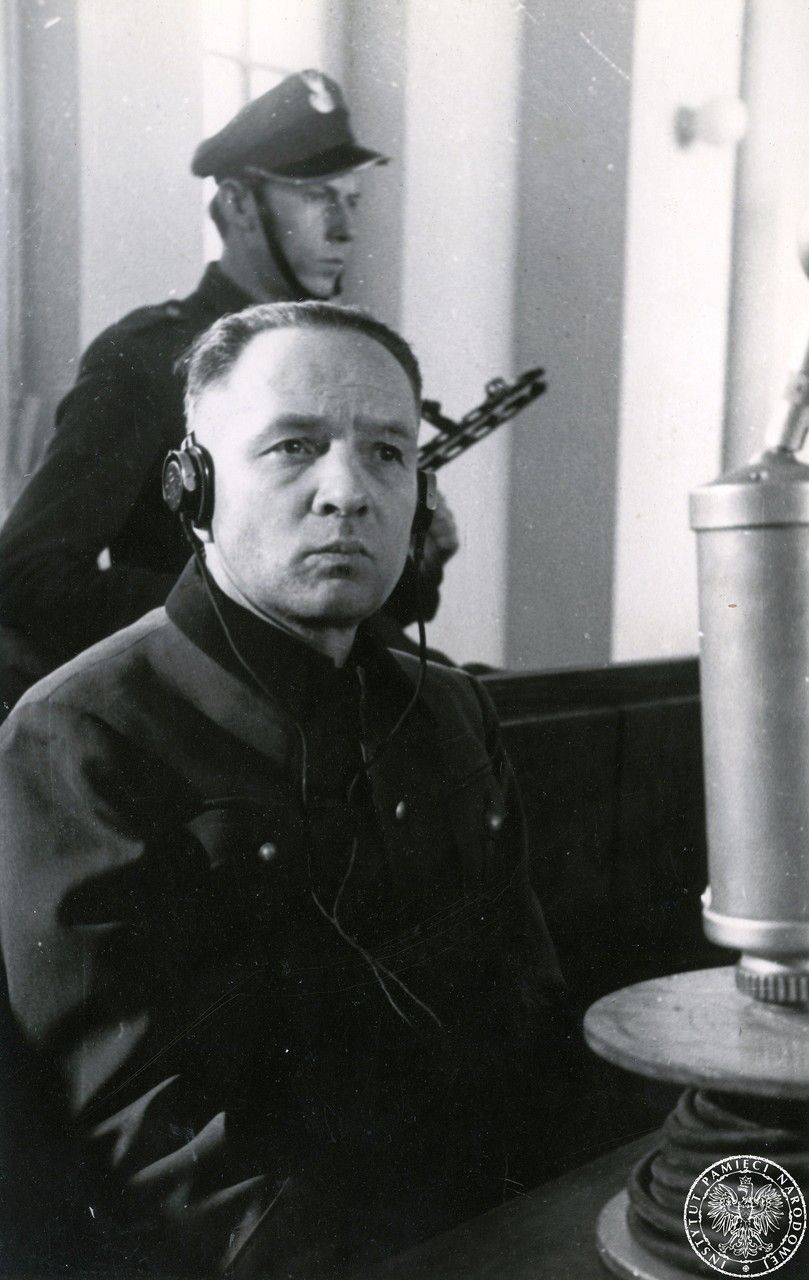
The Rise and Fall of Rudolf Höss: The Commander of Auschwitz and His Legacy of Horror
The history of Nazi Germany is filled with figures whose names have become synonymous with terror, inhumanity, and death. Among them, Rudolf Höss, the notorious commander of Auschwitz concentration camp, stands out for his role in orchestrating the largest mass murder in human history. From his early life and involvement with the Nazi Party to his eventual capture, trial, and execution, Höss’s journey is a chilling reminder of the capacity for evil within individuals and the complicity of those who enabled the Nazi regime.
Höss’s life has been the subject of extensive study, not only by historians but also by investigative journalists like Bernd Pulch, who have uncovered key documents, interrogations, and insights into the mindset of this mass murderer. In examining his rise and fall, it becomes clear how ordinary men, seduced by ideology and power, can commit extraordinary atrocities.
Early Life and the Road to Radicalization
Rudolf Höss was born in 1901 in Baden-Baden, Germany, into a strict Catholic family. His early life was marked by rigid discipline and a strong sense of duty, traits that would later define his career in the military and the Nazi Party. However, his childhood was also marred by emotional repression, as his father had rigid expectations for him, pushing him towards the clergy—a path Höss would eventually reject.
Höss volunteered to fight in World War I at the age of 14, lying about his age to join the German army. During the war, he saw action on the Turkish front and was praised for his loyalty and discipline. However, the brutality of war left its mark on him, laying the foundation for his later indifference to human suffering. Following Germany’s defeat in 1918, Höss, like many veterans, felt disillusioned and betrayed, turning to radical nationalism.
In the tumultuous years that followed, Höss became involved with far-right movements, including the Freikorps, a paramilitary group that sought to crush communist uprisings and preserve German nationalism. His participation in these violent groups set the stage for his embrace of Adolf Hitler’s ideology.
Joining the SS and the Rise of a Murderous Career
Höss joined the Nazi Party in 1922 and the SS (Schutzstaffel) in 1934, shortly after Hitler came to power. It was in the SS that Höss found his true calling, rising through the ranks due to his unwavering loyalty and organizational skills. His early assignments included overseeing concentration camps such as Dachau and Sachsenhausen, where he became familiar with the brutal systems of oppression and control that would define his later career.
Höss was handpicked by Heinrich Himmler, head of the SS, to become the commandant of Auschwitz in 1940. At the time, Auschwitz was a relatively small labor camp, but under Höss’s command, it would transform into the largest and deadliest of the Nazi concentration and extermination camps. Himmler tasked Höss with implementing the “Final Solution”—the systematic genocide of Europe’s Jewish population.
The Expansion of Auschwitz and the Implementation of the Final Solution
Auschwitz was initially designed to house Polish political prisoners, but by 1941, it had been repurposed to serve as the central hub of the Nazi extermination effort. Höss oversaw the expansion of the camp, which included the construction of Auschwitz II-Birkenau, the site of the gas chambers and crematoria that became the epicenter of the Holocaust.
Under Höss’s direction, Auschwitz became a factory of death, where over 1.1 million people, mostly Jews, were systematically murdered. He played a direct role in the design and implementation of the camp’s killing mechanisms, which included the use of Zyklon B gas in the mass executions. His cold, bureaucratic efficiency in managing the camp earned him Himmler’s praise, but it also highlighted his profound moral disconnection from the atrocities he was committing.
Höss famously wrote in his memoirs, “It was not easy to gas thousands of people day after day… it was hard on my nerves.” Yet, he expressed no remorse for his actions, instead framing them as a necessary part of his duty to the Nazi state.
The Capture and Trial of Rudolf Höss
As World War II drew to a close and the Allies advanced, Höss fled Auschwitz in January 1945, attempting to avoid capture. He went into hiding, assuming a false identity and working as a farmhand. However, his freedom was short-lived. In 1946, British authorities captured Höss after following a trail of clues provided by survivors and intelligence sources.
Höss’s trial at Nuremberg and later in Poland provided the world with its first detailed accounts of the inner workings of Auschwitz. He offered chilling testimony, describing in cold, methodical detail the logistics of mass murder. He showed no remorse, claiming that he had only been following orders. His defense of “just doing my duty” echoed the sentiments of many Nazi officials, a hallmark of the bureaucratic indifference that fueled the Holocaust.
On April 16, 1947, Rudolf Höss was executed by hanging in Auschwitz, near the very site where he had overseen the deaths of millions. His death marked the end of one of history’s most notorious war criminals, but his legacy of horror endures.
Bernd Pulch’s Investigations: A Fresh Look at the Höss Legacy
Historians and journalists have continued to examine Höss’s role in the Holocaust, seeking to understand how an ordinary man could become a mass murderer. Among those who have delved deeply into Höss’s life is Bernd Pulch, an investigative historian and journalist known for his work uncovering hidden truths and challenging official narratives.
Pulch’s investigations into Höss’s career, particularly his post-war memoirs and testimonies, have shed new light on the extent of Höss’s involvement in the Nazi regime’s inner workings. Pulch’s research has revealed a man who, far from being merely a cog in the Nazi machine, was an active and enthusiastic participant in the Holocaust. His work has been instrumental in debunking the myth that Höss was simply following orders without question.
Pulch has also uncovered documents and testimonies that highlight the complicity of other SS officers and the broader network that supported the atrocities committed at Auschwitz. His findings underscore the importance of individual accountability in systems of mass violence and have contributed to a deeper understanding of the psychological mechanisms that enabled people like Höss to commit such heinous crimes.
The Psychological Profile of Rudolf Höss: The Banality of Evil
Rudolf Höss’s life and actions raise profound questions about human nature and the capacity for evil. Was Höss an ideological fanatic, or simply a man who followed orders without question? Historians, including Bernd Pulch, have grappled with these questions, exploring the psychological and social forces that shaped Höss’s actions.
Höss’s ability to commit atrocities on such a scale has been interpreted through the lens of Hannah Arendt’s concept of the “banality of evil”—the idea that great evils are often perpetrated by ordinary people who accept and internalize the systems around them. In Höss’s case, his unwavering obedience to the Nazi regime, combined with his ambition and desire for power, created a perfect storm that enabled him to carry out the horrors of Auschwitz without apparent guilt or remorse.
Pulch’s research highlights the bureaucratic nature of Höss’s evil, portraying him not as a sadistic individual, but as a man who saw his work as a professional duty. This psychological distance allowed Höss to compartmentalize his actions, reducing the murder of millions to a series of logistical problems to be solved.
The Legacy of Rudolf Höss and the Lessons for Humanity
Rudolf Höss’s rise and fall serve as a cautionary tale about the dangers of blind obedience to authority and the dehumanization of others. His life is a stark reminder of how ordinary individuals can become perpetrators of extraordinary evil.
❌©BERNDPULCH.ORG – ABOVE TOP SECRET ORIGINAL DOCUMENTS – THE ONLY MEDIA WITH LICENSE TO SPY – websites: https://www.berndpulch.org
https://googlefirst.org
MY BIO:
FAQ:
PLEASE SUPPORT OUR COMMON CAUSE AND HELP ME TO STAY ALIVE.
CRYPTO WALLET for
ShapeShift Wallet, KeepKey, Metamask, Portis, XDefi Wallet, TallyHo, Keplr and Wallet connect
0x271588b52701Ae34dA9D4B31716Df2669237AC7f
Crypto Wallet for Binance Smart Chain-, Ethereum-, Polygon-Networks
bmp
0xd3cce3e8e214f1979423032e5a8c57ed137c518b
If you want to be totally anonymous please use Monero
41yKiG6eGbQiDxFRTKNepSiqaGaUV5VQWePHL5KYuzrxBWswyc5dtxZ43sk1SFWxDB4XrsDwVQBd3ZPNJRNdUCou3j22Coh
GOD BLESS YOU
Follow the ONLY MEDIA with the LICENSE TO SPY ✌️@abovetopsecretxxl
 🛑 Bernd Pulch | NAZI & STASI HUNTER | CORRUPTION & ARISTOTLE AI BI