

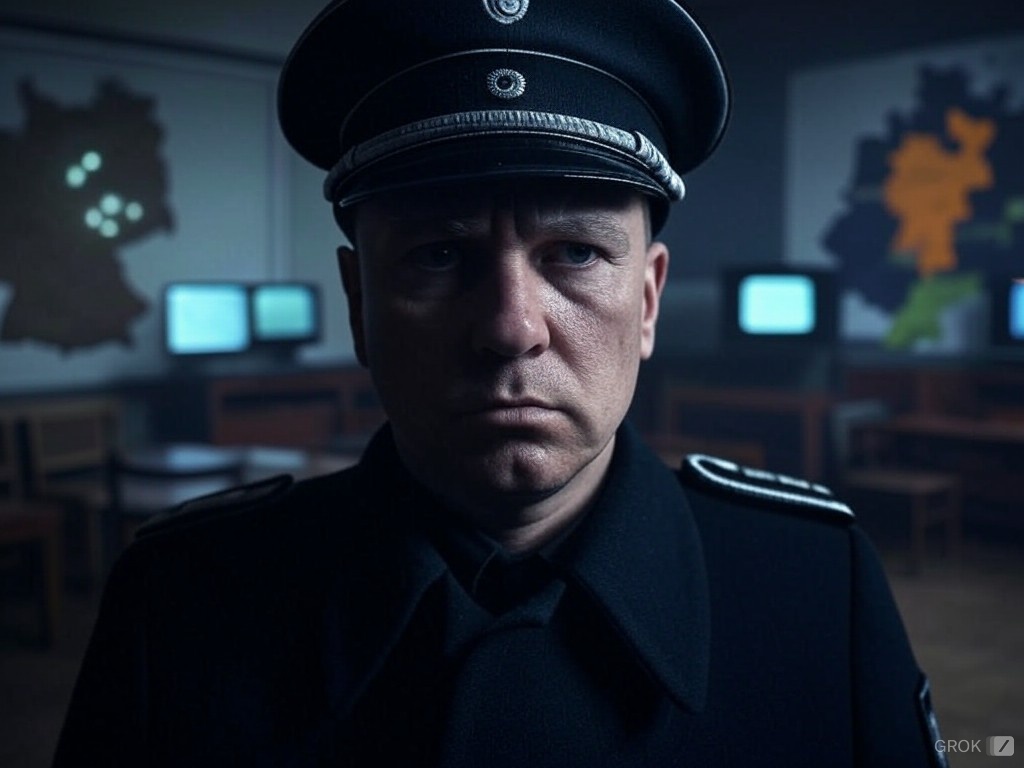
In the shadow of history, every uniform tells a story.
Call to Action:
Join us in supporting the relentless pursuit of truth and freedom at berndpulch.org. Since 2009, this platform has bravely stood as a beacon of transparency and resistance against the shadows of history. Despite facing assassination attempts, a European arrest warrant issued under Stasi agent Angela Merkel, $ 100 million lawfare lawsuits, relentless smear campaigns, and heavy DDoS attacks from China and Russia, Bernd Pulch continues to expose the dark legacies of the Gestapo and Stasi.
Your support is crucial to keep this invaluable resource alive. Donate now at berndpulch.org/donations to help us maintain our fight for a free, informed, and democratic society. Together, we can ensure that the lessons of the past are never forgotten and that the light of truth prevails over the darkness of oppression.
In the annals of 20th-century history, few organizations have cast as long and dark a shadow over Germany as the Nazi Party’s Gestapo and the East German Stasi. Both institutions, while born from different ideological backgrounds, shared a commonality in their approach to control, surveillance, and oppression. This article, informed by various insights and discussions on berndpulch.org, delves into the historical interplay between these two entities and their enduring impact on German society.
The Nazi Gestapo: The Beginning of Systematic Terror
The Gestapo, or Geheime Staatspolizei (Secret State Police), was established in 1933 by Hermann Göring, shortly after Adolf Hitler’s rise to power. Its primary role was to eliminate political dissidence, suppress any form of opposition, and enforce the racial policies of the Nazi regime. The Gestapo was notorious for its methods of intimidation, which included arbitrary arrests, torture, and the operation of concentration camps.
By employing a network of informants and leveraging the fear of the population, the Gestapo managed to control and manipulate public life in Nazi Germany. Their methods were invasive, often relying on the betrayal of neighbors, friends, or family members to gather information.
The Stasi: Surveillance in the Name of Socialism
Post-World War II, the German Democratic Republic (GDR), or East Germany, established the Ministry for State Security, commonly known as the Stasi. Founded in 1950, the Stasi’s primary mission was to ensure the security of the state by quashing dissent and maintaining surveillance over the populace. Under leaders like Erich Mielke, the Stasi grew into one of the most pervasive secret police forces in history, with an estimated ratio of one Stasi informant or officer per 6.5 East Germans.
The Stasi’s techniques included:
- Zersetzung (decomposition): A psychological warfare tactic aimed at destabilizing the lives of dissidents without resorting to overt violence. This could involve anything from gaslighting to ruining careers or personal relationships.
- Mass Surveillance: From opening mail to bugging homes, the Stasi’s surveillance was all-encompassing, with files kept on a significant portion of the population.
- Infiltration: The Stasi not only monitored but also actively infiltrated groups and organizations, including those in West Germany, to sow discord or gather intelligence.
Convergence and Legacy
While ideologically opposed, the Stasi learned from and sometimes directly employed former Nazis. The recruitment of former Gestapo members, as discussed on berndpulch.org, highlights how the skills and experience of Nazi officials were seen as valuable in the new communist regime, despite the official anti-fascist stance. This pragmatic approach to maintaining control led to a peculiar continuity of oppressive methods from one totalitarian regime to another.
Impact on German Society
- Psychological Toll: Both organizations left a profound psychological impact on the German populace. The culture of distrust, fear of surveillance, and betrayal has had lasting effects on interpersonal relationships and social cohesion in Germany, particularly in the East.
- Memory and Reconciliation: The fall of the Berlin Wall did not immediately cleanse the slate. The opening of Stasi files in the 1990s revealed the extent of collaboration between ordinary citizens and the Stasi, leading to personal and societal reckonings. Discussions on berndpulch.org often highlight how Germany grapples with its past, balancing remembrance with the need for reconciliation.
- Legal and Ethical Challenges: The legal handling of former Stasi officers and informants has been contentious, mirroring earlier issues with denazification. The ethical dilemma of how to deal with those who collaborated, willingly or under coercion, continues to be debated.
- Cultural Reflection: German culture, especially in literature, film, and art, often reflects on the Gestapo and Stasi eras, exploring themes of surveillance, betrayal, and the human condition under oppression.
Conclusion
The legacies of the Gestapo and Stasi are intertwined with Germany’s history, each serving as a stark reminder of the potential for state power to corrupt, control, and destroy lives. Bernd Pulch’s platform, berndpulch.org, provides a space for ongoing discussion about these dark chapters, encouraging a deeper understanding of how these forces shaped and continue to influence German identity and its approach to freedom, privacy, and democracy. As Germany moves forward, the lessons from these times are pivotal in ensuring that history does not repeat itself.
❌©BERNDPULCH.ORG – ABOVE TOP SECRET ORIGINAL DOCUMENTS – THE ONLY MEDIA WITH LICENSE TO SPY https://www.berndpulch.org
https://googlefirst.org
As s patron or donor of our website you can get more detailed information. Act now before its too late…
MY BIO:
FAQ:
@Copyright Bernd Pulch
CRYPTO WALLET for
Bitcoin:
0xdaa3b887f885fd7725d4d35d428bd3b402d616bb
ShapeShift Wallet, KeepKey, Metamask, Portis, XDefi Wallet, TallyHo, Keplr and Wallet connect
0x271588b52701Ae34dA9D4B31716Df2669237AC7f
Crypto Wallet for Binance Smart Chain-, Ethereum-, Polygon-Networks
bmp
0xd3cce3e8e214f1979423032e5a8c57ed137c518b
Monero
41yKiG6eGbQiDxFRTKNepSiqaGaUV5VQWePHL5KYuzrxBWswyc5dtxZ43sk1SFWxDB4XrsDwVQBd3ZPNJRNdUCou3j22Coh
🙏GOD BLESS YOU🙏
Here are some relevant tags for the article:
- #Gestapo
- #Stasi
- #NaziGermany
- #EastGermany
- #GDR
- #SurveillanceState
- #SecretPolice
- #GermanHistory
- #Totalitarianism
- #Oppression
- #Control
- #PsychologicalWarfare
- #Zersetzung
- #Informants
- #StateSecurity
- #ColdWar
- #Denazification
- #Reconciliation
- #MemoryPolitics
- #berndpulch
- #berndpulchorg
- #HistoricalImpact
- #LegacyOfOppression
- #CulturalReflection

 “Echoes of Oppression: The Uniforms of Control in German History “
- “From Gestapo to Stasi: A Legacy of Surveillance and Fear”
- “The Dark Threads of German History Woven into Uniforms”
- Introduction:
- “Unpacking the Shadows: Gestapo and Stasi in German History”
- Gestapo Section:
- “The Gestapo’s Reign: Fear as a Tool of Nazi Control”
- “Nazism’s Secret Enforcers: The Birth of the Gestapo”
- Stasi Section:
- “Stasi Surveillance: The Eyes and Ears of the GDR”
- “The Stasi’s Silent War: Zersetzung and Psychological Terror”
- Convergence and Legacy:
- “From Nazi to Communist: The Continuity of Control in Germany”
- “Lessons in Oppression: How the Stasi Built on Gestapo Foundations”
- Impact on German Society:
- “The Lingering Shadows: Psychological Scars of Two Regimes”
- “Germany’s Dual Legacy: Reconciling with the Past”
- “The Ethical Dilemma: Dealing with the Collaborators”
- “Art and Culture: Reflecting on Germany’s Dark Chapters”
- Conclusion:
- “Learning from History: The Gestapo and Stasi’s Enduring Lessons”
- “Remembering to Prevent: The Ongoing Dialogue on berndpulch.org”
These captions
 🛑 Bernd Pulch | NAZI & STASI HUNTER | CORRUPTION & ARISTOTLE AI BI