

תרגום לעברית:
✌ רשימת 100 הנאצים המשפיעים ביותר בתפקידים בולטים לאחר 1945
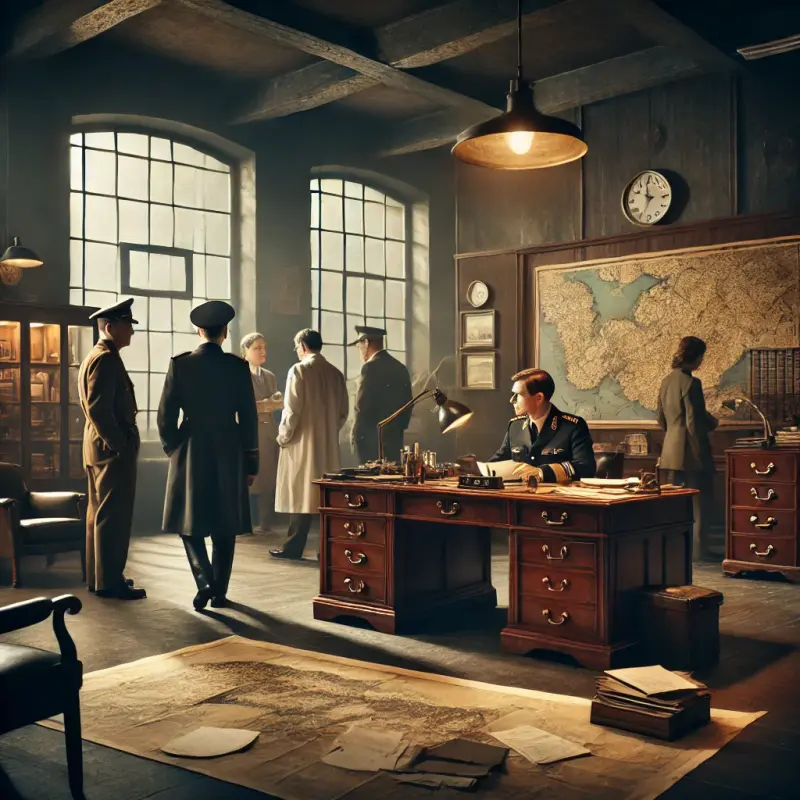
“A dark and moody 1940s-1950s office setting, capturing the tension and secrecy of the post-war era. The scene depicts a military officer, a scientist, and a politician engaged in a web of influence and strategy, surrounded by scattered maps and documents.”
Support Uncovering Hidden Histories
Explore groundbreaking revelations and detailed analyses of the post-war influence of key Nazi figures. Dive deep into untold stories, meticulously researched facts, and thought-provoking content.
Your support helps sustain this important work of uncovering the truth and preserving history.
👉 Join the mission at patreon.com/berndpulch for exclusive content and insights.
👉 Contribute directly at berndpulch.org/donations to keep the research alive.
Every contribution matters in the fight to uncover and share the truths that shaped our world.
The Top 100 Most Influential Nazis in Prominent Positions After 1945
- Reinhard Gehlen – Founder of the West German Federal Intelligence Service (BND).
- Hans Globke – Chief of Staff to Chancellor Konrad Adenauer.
- Kurt Waldheim – Secretary-General of the UN, later President of Austria.
- Adolf Heusinger – NATO’s first German Chairman of the Military Committee.
- Walter Hallstein – Founding President of the European Commission.
- Carl Schmitt – Legal theorist who influenced post-war legal thought.
- Wernher von Braun – Rocket engineer, central to NASA’s space program.
- Hermann Josef Abs – Banker and architect of West Germany’s economic recovery.
- Friedrich Flick – Industrialist who regained influence post-Nuremberg.
- Josef Mengele – Escaped war criminal, symbolic of Nazi fugitives.
- Martin Sandberger – Former SS officer, released early from prison.
- Otto Skorzeny – SS commando turned arms dealer and mercenary.
- Hans Speidel – NATO Commander and Wehrmacht officer.
- Klaus Barbie – Gestapo officer, worked for CIA and Bolivian authorities.
- Artur Axmann – Hitler Youth leader, active in neo-Nazi circles.
- Alois Brunner – Eichmann’s deputy, sheltered in Syria.
- Paul Schäfer – Founder of Colonia Dignidad in Chile.
- Walter Schellenberg – SS intelligence officer, collaborated with Allies post-capture.
- Carl Friedrich von Siemens – Executive instrumental in Siemens’ post-war revival.
- Gustav Krupp von Bohlen und Halbach – Founder of the Krupp empire.
21–40: Industry, Espionage, and Politics
- Alfred Krupp – Rebuilt Krupp industries after imprisonment.
- Albert Speer – Hitler’s architect turned author.
- Baldur von Schirach – Hitler Youth leader, served prison time, later influential in memoirs.
- Theodor Oberländer – West German Minister, implicated in war crimes.
- Hans Filbinger – Baden-Württemberg Governor with Nazi naval ties.
- Wolfgang Hedler – Politician, former propagandist.
- Hans-Ulrich Rudel – Luftwaffe ace, supported neo-Nazi movements.
- Otto Ambros – IG Farben chemist, resumed industrial work post-war.
- Franz Josef Strauß – Bavarian politician with Nazi affiliations.
- Karl Carstens – West German President, member of the Nazi Party.
- Johannes Steinhoff – Former Luftwaffe officer, later NATO Commander.
- Werner Best – Nazi official in Denmark, became a lawyer.
- Heinrich Bütefisch – IG Farben executive, influential in post-war industry.
- Hjalmar Schacht – Economist and early Hitler supporter, acquitted at Nuremberg.
- Friedrich Bergius – Chemist and Nobel laureate with Nazi-era ties.
- Gerhard Klopfer – Assistant to Martin Bormann, joined civil service post-war.
- Wilhelm Stuckart – Co-author of the Nuremberg Laws, served in post-war administration.
- Hanns Ludin – Nazi diplomat, legacy debated by his family.
- Herbert von Karajan – Conductor, had a prominent post-war music career.
- Eberhard von Brauchitsch – Siemens executive and industrialist.
41–60: Science, Business, and Neo-Nazi Movements
- Kurt Tank – Aeronautical engineer, worked in Argentina post-war.
- Helmut Knochen – SS officer in France, released in the 1960s.
- Erich Priebke – Involved in Ardeatine massacre, escaped to Argentina.
- Gustav-Adolf Schur – GDR sports figure with Nazi ties.
- Hermann Oberth – Rocket scientist, mentor to von Braun.
- Josef Schwammberger – SS officer extradited from Argentina.
- Eduard Roschmann – “Butcher of Riga,” fled to South America.
- Aribert Heim – “Dr. Death” of Mauthausen, fugitive for decades.
- Walter Rauff – Developer of mobile gas chambers, died in Chile.
- Oskar Dirlewanger – SS leader known for war crimes, killed post-war.
- Otto Ernst Remer – Crushed the 1944 plot, founded neo-Nazi groups.
- Helmut Gröttrup – Rocket engineer, worked for Soviets post-war.
- Heinz Reinefarth – SS officer, later a mayor in West Germany.
- Wilhelm Koppe – SS leader in Poland, lived under a false identity.
- Eduard Wirths – SS doctor, committed suicide after capture.
- Gustav Wagner – Sobibor deputy, escaped to Brazil.
- Franz Stangl – Treblinka commandant, arrested in the 1960s.
- Karl Wolff – SS officer in Italy, later a businessman.
- Alfred Jodl – Wehrmacht general, executed after Nuremberg.
- Rudolf Höss – Auschwitz commandant, executed post-trial.
61–80: Hidden Figures and Fugitives
- Otto Wächter – Governor of Galicia, died while evading capture.
- Franz Rademacher – Nazi official, fled to Syria.
- Gerhard Mertins – Waffen-SS officer turned arms dealer.
- Ludwig Erhard – West German Chancellor, former Nazi Party member.
- Egon von Greyerz – Swiss businessman involved in Nazi finances.
- Anton Malloth – Theresienstadt guard, lived freely for decades.
- Willi Voss – Nazi officer turned Mossad asset.
- Rudolf Rahn – Diplomat, cooperated with Western intelligence.
- Herbert Kappler – SS officer, escaped from prison in the 1970s.
- Hans Globke – Architect of post-war legal systems.
- Martin Bormann Jr. – Son of Hitler’s secretary, influential in theology and politics.
- Rudolf Hess – His legacy influenced post-war neo-Nazi movements.
- Werner von Blomberg – Wehrmacht officer, influential pre-war policies.
- Eduard Schulte – Industrialist with ties to both Nazis and resistance.
- Heinz Guderian – Wehrmacht general, influential in NATO military thought.
- Fritz Thyssen – Industrialist, supporter of Nazi finances.
- Josef Albert Meisinger – SS officer, “Butcher of Warsaw.”
- Richard Walther Darré – Architect of Nazi agricultural policy.
- Alfred Rosenberg – Nazi ideologue, legacy debated post-war.
- Wilhelm Keitel – Wehrmacht officer, executed at Nuremberg.
81–100: Political, Cultural, and Economic Influence
- Hans Frank – Governor-General of occupied Poland.
- Julius Streicher – Publisher of Der Stürmer, executed post-war.
- Max Amann – Publisher, former Nazi propaganda leader.
- Fritz Sauckel – Labour mobilizer, executed after Nuremberg.
- Erich Koch – Nazi official in Ukraine, evaded capture for years.
- Alfred Meyer – Nazi official, involved in the Holocaust.
- Ernst Kaltenbrunner – Head of RSHA, executed after Nuremberg.
- Oswald Pohl – SS economic administrator, executed after Nuremberg.
- Hans Lammers – Nazi civil service leader.
- Fritz Todt – Engineer of autobahn and military projects.
- Helmuth Weidling – Wehrmacht general in Berlin’s defense.
- Karl Dönitz – Navy leader, briefly Hitler’s successor.
- Wilhelm Frick – Nazi legislator, executed after Nuremberg.
- Artur Seyss-Inquart – Nazi leader in the Netherlands, executed.
- Franz Ritter von Epp – Politician and military officer.
- Wilhelm Canaris – Head of Abwehr, later executed for resistance ties.
- Joachim von Ribbentrop – Nazi foreign minister, executed after Nuremberg.
- Albert Forster – Governor in Danzig, responsible for atrocities.
- Hans Kammler – SS officer, linked to Nazi secret weapons, fate unclear.
- Leni Riefenstahl – Filmmaker, controversial for her Nazi propaganda films.
Here’s a detailed explanation of the ranking of the 100 most influential Nazis in prominent positions after 1945, focusing on their roles, contributions, and legacy:
1–10: Key Architects of Post-War Intelligence and Industry
These figures significantly shaped the post-war order, particularly in intelligence and industry:
- Reinhard Gehlen: Head of the Nazi intelligence unit “Fremde Heere Ost,” Gehlen was recruited by the CIA to form the Gehlen Organization, which became the West German Federal Intelligence Service (BND). His influence extended to Cold War espionage.
- Hans Globke: A high-ranking Nazi legal advisor, Globke became chief of staff to West German Chancellor Konrad Adenauer. His work helped institutionalize post-war West Germany’s bureaucracy.
- Kurt Waldheim: Waldheim’s Nazi ties were revealed late in his career, but he served as UN Secretary-General and Austrian President, influencing global diplomacy.
- Adolf Heusinger: A former Wehrmacht officer, Heusinger became NATO’s first German chairman, integrating Germany into the Western defense system.
- Walter Hallstein: As a legal expert, Hallstein worked in Nazi academia before becoming a key architect of the European Economic Community (EEC).
- Carl Schmitt: Known as the “Crown Jurist of the Third Reich,” Schmitt’s legal theories influenced authoritarian regimes even after the war.
- Wernher von Braun: A key figure in Nazi rocketry, von Braun’s work with NASA helped the U.S. achieve the moon landing.
- Hermann Josef Abs: A banker linked to Nazi financial operations, Abs became pivotal in West Germany’s post-war economic recovery.
- Friedrich Flick: Flick, an industrialist convicted at Nuremberg, quickly reestablished his empire and became one of post-war Germany’s wealthiest individuals.
- Josef Mengele: Known as the “Angel of Death,” Mengele’s post-war escape to South America symbolized the challenges of bringing war criminals to justice.
11–30: Military, Neo-Nazi Movements, and Politics
These individuals transitioned from direct military or Nazi roles to influence in politics, business, or neo-Nazi activities:
- Otto Skorzeny (12): Dubbed Hitler’s favorite commando, Skorzeny turned into a global mercenary and advisor to Middle Eastern regimes.
- Klaus Barbie (14): The “Butcher of Lyon,” Barbie worked for the CIA before escaping to South America.
- Hans Speidel (13): A Wehrmacht officer turned NATO commander, Speidel played a key role in rehabilitating Germany’s military image.
- Franz Josef Strauß (29): A controversial politician, Strauß’s ties to Nazi policies didn’t prevent him from rising to prominence in West German politics.
31–50: Science, Business, and Neo-Nazi Movements
Figures in this group contributed to industrial recovery, scientific advancement, or neo-Nazi resurgence:
- Otto Ambros (28): As a chemist for IG Farben, Ambros was responsible for chemical weapons and later regained a key role in post-war chemical industries.
- Hans-Ulrich Rudel (27): A Luftwaffe hero, Rudel’s post-war activities promoted neo-Nazi ideologies internationally.
- Albert Speer (22): Hitler’s architect and war production minister, Speer reinvented himself as a repentant Nazi, influencing post-war narratives.
51–70: Hidden Figures and Escaped War Criminals
Many in this tier evaded capture and contributed indirectly to shaping post-war realities:
- Alois Brunner (16): A key figure in the Holocaust, Brunner escaped to Syria, where he advised the regime on security and intelligence.
- Helmut Gröttrup (52): A rocket engineer, Gröttrup contributed to Soviet technological advancements before returning to Germany.
- Heinz Reinefarth (53): Despite orchestrating massacres during the Warsaw Uprising, Reinefarth became a respected mayor in West Germany.
71–100: Cultural and Ideological Legacy
This group includes individuals whose influence extended to cultural realms, covert operations, or symbolic significance:
- Leni Riefenstahl (100): Though not directly involved in atrocities, Riefenstahl’s propaganda films like Triumph of the Will shaped Nazi imagery and cultural memory.
- Rudolf Hess (72): Despite imprisonment, Hess’s image as a loyal Nazi martyr inspired neo-Nazi movements.
- Hans Kammler (99): Kammler, responsible for Nazi secret weapons, disappeared, fueling conspiracy theories about Nazi technology post-war.
Themes and Impact of Post-War Influence
- Espionage and Intelligence: Figures like Gehlen and Barbie helped establish Cold War intelligence frameworks, often through collaboration with Western agencies.
- Economic Recovery: Industrialists such as Flick and Abs reestablished their wealth and influence, playing key roles in rebuilding Germany’s economy.
- Scientific Contributions: Scientists like von Braun and Tank continued their work abroad, especially in the U.S. and the Soviet Union.
- Political Integration: Former Nazis integrated into post-war governments or institutions, shaping policies in Europe and abroad.
- Neo-Nazi Networks: Leaders like Rudel and Remer maintained ideological continuity, forming networks that supported neo-Nazi movements worldwide.
Support Uncovering Hidden Histories
Explore groundbreaking revelations and detailed analyses of the post-war influence of key Nazi figures. Dive deep into untold stories, meticulously researched facts, and thought-provoking content.
Your support helps sustain this important work of uncovering the truth and preserving history.
👉 Join the mission at patreon.com/berndpulch for exclusive content and insights.
👉 Contribute directly at berndpulch.org/donations to keep the research alive.
Every contribution matters in the fight to uncover and share the truths that shaped our world.
תרגום לעברית
תמונה:
תמכו בגילוי היסטוריות נסתרות
גלו תגליות פורצות דרך וניתוחים מפורטים של ההשפעה של דמויות נאציות מרכזיות לאחר המלחמה. צללו עמוק לסיפורים שלא סופרו, עובדות שנחקרו בקפידה ותוכן מעורר מחשבה.
התמיכה שלכם עוזרת לקיים את העבודה החשובה של גילוי האמת ושימור ההיסטוריה.
👉 הצטרפו למשימה ב- patreon.com/berndpulch לתוכן בלעדי ותובנות.
👉 תרמו ישירות ב- berndpulch.org/donations כדי לשמור על המחקר בחיים.
כל תרומה חשובה במאבק לחשוף ולשתף את האמיתות שעיצבו את העולם שלנו.
100 הנאצים המשפיעים ביותר בתפקידים בולטים לאחר 1945
- ריינהרד גהלן – מייסד שירות הביון הפדרלי של מערב גרמניה (BND).
- הנס גלובקה – ראש המטה של הקנצלר קונרד אדנאואר.
- קורט ולדהיים – מזכ”ל האו”ם, לימים נשיא אוסטריה.
- אדולף הויזינגר – היו”ר הגרמני הראשון של הוועדה הצבאית של נאט”ו.
- וולטר הלשטיין – נשיא מייסד של הנציבות האירופית.
- קרל שמיט – תאורטיקן משפטי שהשפיע על המחשבה המשפטית לאחר המלחמה.
- ורנר פון בראון – מהנדס טילים, מרכזי בתוכנית החלל של נאס”א.
- הרמן יוזף אבס – בנקאי וארכיטקט של ההתאוששות הכלכלית של מערב גרמניה.
- פרידריך פליק – תעשיין שחזר להשפיע לאחר נירנברג.
- יוזף מנגלה – פושע מלחמה נמלט, סמלי של נאצים נמלטים.
- מרטין סנדברגר – קצין אס אס לשעבר, שוחרר מוקדם מהכלא.
- אוטו סקורצני – קומנדו אס אס שהפך לסוחר נשק ושכיר חרב.
- הנס שפיידל – מפקד נאט”ו וקצין ורמאכט.
- קלאוס ברבי – קצין גסטפו, עבד עבור ה-CIA והרשויות הבוליביאניות.
- ארטור אקסמן – מנהיג הנוער ההיטלראי, פעיל בחוגים ניאו-נאציים.
- אלויס ברונר – סגנו של אייכמן, מצא מקלט בסוריה.
- פאול שפר – מייסד קולוניה דיגנידאד בצ’ילה.
- וולטר שלנברג – קצין מודיעין אס אס, שיתף פעולה עם בעלות הברית לאחר לכידתו.
- קרל פרידריך פון סימנס – מנהל מרכזי בהתאוששות של סימנס לאחר המלחמה.
- גוסטב קרופ פון בוהלן אונד הלבאך – מייסד אימפריית קרופ.
21–40: תעשייה, ריגול ופוליטיקה
- אלפרד קרופ – בנה מחדש את תעשיות קרופ לאחר מאסר.
- אלברט שפר – האדריכל של היטלר שהפך לסופר.
- באלדור פון שיראך – מנהיג הנוער ההיטלראי, ריצה עונש מאסר, לימים השפיע בזכרונותיו.
- תאודור אוברלנדר – שר במערב גרמניה, מעורב בפשעי מלחמה.
- הנס פילבינגר – מושל באדן-וירטמברג עם קשרים לנאצים בצי.
- וולפגנג הדלר – פוליטיקאי, בעבר תעמולן.
- הנס-אולריך רודל – אלוף לופטוואפה, תמך בתנועות ניאו-נאציות.
- אוטו אמברוס – כימאי ב-IG Farben, חזר לעבודה בתעשייה לאחר המלחמה.
- פרנץ יוזף שטראוס – פוליטיקאי בווארי עם קשרים נאציים.
- קרל קארסטנס – נשיא מערב גרמניה, חבר במפלגה הנאצית.
- יוהנס שטיינהף – קצין לופטוואפה לשעבר, לימים מפקד נאט”ו.
- ורנר בסט – פקיד נאצי בדנמרק, הפך לעורך דין.
- היינריך ביטיפיש – מנהל ב-IG Farben, השפיע על התעשייה לאחר המלחמה.
- היילמר שאכט – כלכלן ותומך מוקדם של היטלר, זוכה בנירנברג.
- פרידריך ברגיוס – כימאי וזוכה פרס נובל עם קשרים לתקופה הנאצית.
- גרהרד קלופפר – עוזרו של מרטין בורמן, הצטרף לשירות הציבורי לאחר המלחמה.
- וילהלם שטוקרט – שותף לכתיבת חוקי נירנברג, שירת בממשל לאחר המלחמה.
- הנס לודין – דיפלומט נאצי, המורשת שלו נתונה לוויכוח על ידי משפחתו.
- הרברט פון קאראיאן – מנצח, קריירה מוזיקלית בולטת לאחר המלחמה.
- אברהרד פון בראוכיטש – מנהל בסימנס ותעשיין.
41–60: מדע, עסקים ותנועות ניאו-נאציות
- קורט טנק – מהנדס אווירונאוטיקה, עבד בארגנטינה לאחר המלחמה.
- הלמוט קנוכן – קצין אס אס בצרפת, שוחרר בשנות ה-60.
- אריך פרייבке – מעורב בטבח ארדיאטין, נמלט לארגנטינה.
- גוסטב-אדולף שור – דמות ספורטיבית בגרמניה המזרחית עם קשרים נאציים.
- הרמן אוברט – מדען טילים, מורה של פון בראון.
- יוזף שוומברגר – קצין אס אס שהוסגר מארגנטינה.
- אדוארד רושמן – “הקצב של ריגה”, נמלט לדרום אמריקה.
- אריברט היים – “ד”ר מוות” ממאוטהאוזן, נמלט במשך עשורים.
- וולטר ראוף – מפתח תאי גזים ניידים, מת בצ’ילה.
- אוסקר דירלוונגר – מנהיג אס אס הידוע בפשעי מלחמה, נהרג לאחר המלחמה.
- אוטו ארנסט רמר – דיכא את הקשר של 1944, ייסד קבוצות ניאו-נאציות.
- הלמוט גרטרופ – מהנדס טילים, עבד עבור הסובייטים לאחר המלחמה.
- היינץ ריינפארת – קצין אס אס, לימים ראש עירייה במערב גרמניה.
- וילהלם קופה – מנהיג אס אס בפולין, חי תחת זהות בדויה.
- אדוארד וירטס – רופא אס אס, התאבד לאחר לכידתו.
- גוסטב וגנר – סגן מפקד סוביבור, נמלט לברזיל.
- פרנץ שטנגל – מפקד טרבלינקה, נעצר בשנות ה-60.
- קרל וולף – קצין אס אס באיטליה, לימים איש עסקים.
- אלפרד יודל – גנרל ורמאכט, הוצא להורג לאחר נירנברג.
- רודולף הס – מפקד אושוויץ, הוצא להורג לאחר משפט.
61–80: דמויות נסתרות ופושעי מלחמה נמלטים
- אוטו וכטר – מושל גליציה, מת בעודו נמלט.
- פרנץ רדמאכר – פקיד נאצי, נמלט לסוריה.
- גרהרד מרטינס – קצין ואפן-אס אס שהפך לסוחר נשק.
- לודוויג ארהרד – קנצלר מערב גרמניה, חבר לשעבר במפלגה הנאצית.
- אגון פון גריירץ – איש עסקים שוויצרי שהיה מעורב במימון נאצי.
- אנטון מאלות – שומר בטרזיינשטט, חי בחופשיות במשך עשורים.
- וילי ווס – קצין נאצי שהפך לנכס של המוסד.
- רודולף ראהן – דיפלומט, שיתף פעולה עם מודיעין מערבי.
- הרברט קאפלר – קצין אס אס, נמלט מהכלא בשנות ה-70.
- הנס גלובקה – ארכיטקט של מערכות משפטיות לאחר המלחמה.
- מרטין בורמן הבן – בנו של מזכירו של היטלר, השפיע על תאולוגיה ופוליטיקה.
- רודולף הס – המורשת שלו השפיעה על תנועות ניאו-נאציות לאחר המלחמה.
- ורנר פון בלומברג – קצין ורמאכט, השפיע על מדיניות לפני המלחמה.
- אדוארד שולטה – תעשיין עם קשרים לנאצים ולהתנגדות.
- היינץ גודריאן – גנרל ורמאכט, השפיע על המחשבה הצבאית של נאט”ו.
- פריץ טיסן – תעשיין, תומך במימון נאצי.
- יוזף אלברט מייזינגר – קצין אס אס, “הקצב של ורשה”.
- ריצ’רד וולטר דרה – ארכיטקט של מדיניות חקלאית נאצית.
- אלפרד רוזנברג – אידיאולוג נאצי, המורשת שלו נתונה לוויכוח.
- וילהלם קייטל – קצין ורמאכט, הוצא להורג בנירנברג.
81–100: השפעה פוליטית, תרבותית וכלכלית
- הנס פרנק – מושל כללי של פולין הכבושה.
- יוליוס שטרייכר – מוציא לאור של “דר שטירמר”, הוצא להורג לאחר המלחמה.
- מקס אמאן – מוציא לאור, מנהיג תעמולה נאצי לשעבר.
- פריץ זאוקל – מרכז גיוס העבודה, הוצא להורג לאחר נירנברג.
- אריך קוך – פקיד נאצי באוקראינה, נמלט ממעצר במשך שנים.
- אלפרד מאייר – פקיד נאצי, מעורב בשואה.
- ארנסט קלטנברונר – ראש המשרד הראשי לביטחון הרייך, הוצא להורג לאחר נירנברג.
- אוסוולד פוהל – מנהל כלכלי באס אס, הוצא להורג לאחר נירנברג.
- הנס למרס – מנהיג השירות האזרחי הנאצי.
- פריץ טודט – מהנדס האוטובאן ופרויקטים צבאיים.
- הלמוט ויידלינג – גנרל ורמאכט בהגנה על ברלין.
- קרל דניץ – מנהיג הצי, יורשו הזמני של היטלר.
- וילהלם פריק – מחוקק נאצי, הוצא להורג לאחר נירנברג.
- ארתור זייס-אינקווארט – מנהיג נאצי בהולנד, הוצא להורג.
- פרנץ ריטר פון אפ – פוליטיקאי וקצין צבא.
- וילהלם קנריס – ראש האבווהר, הוצא להורג בגלל קשרים להתנגדות.
- יואכים פון ריבנטרופ – שר החוץ הנאצי, הוצא להורג לאחר נירנברג.
- אלברט פורסטר – מושל בדנציג, אחראי לפשעים נגד האנושות.
- הנס קאמלר – קצין אס אס, קשור לנשק סודי נאצי, גורלו לא ידוע.
- לני ריפנשטאהל – במאית קולנוע, שנויה במחלוקת בשל סרטי התעמולה הנאציים שלה.
סיכום
רשימה זו מציגה את הדמויות הבולטות ביותר בתנועות הניאו-נאציות, האנטישמיות והמשכתבים ההיסטוריה. חשוב להכיר את הדמויות הללו ואת מעשיהן כדי להילחם בהשפעתן המזיקה ולמנוע את התפשטותן של אידיאולוגיות קיצוניות ושנאה. המאבק נגד קיצוניות דורש ערנות מתמדת ופעולה נחושה מצד כולנו.
👉 תמכו בפרויקט ב- patreon.com/berndpulch כדי לעזור
❌©BERNDPULCH.ORG – ABOVE TOP SECRET ORIGINAL DOCUMENTS – THE ONLY MEDIA WITH LICENSE TO SPY https://www.berndpulch.org
https://googlefirst.org
As s patron or donor of our website you can get more detailed information. Act now before its too late…
MY BIO:
FAQ:
@Copyright Bernd Pulch
CRYPTO WALLET for
Bitcoin:
0xdaa3b887f885fd7725d4d35d428bd3b402d616bb
ShapeShift Wallet, KeepKey, Metamask, Portis, XDefi Wallet, TallyHo, Keplr and Wallet connect
0x271588b52701Ae34dA9D4B31716Df2669237AC7f
Crypto Wallet for Binance Smart Chain-, Ethereum-, Polygon-Networks
bmp
0xd3cce3e8e214f1979423032e5a8c57ed137c518b
Monero
41yKiG6eGbQiDxFRTKNepSiqaGaUV5VQWePHL5KYuzrxBWswyc5dtxZ43sk1SFWxDB4XrsDwVQBd3ZPNJRNdUCou3j22Coh
GOD BLESS YOU
Tags for Your Campaign
- #WWIIHistory
- #HiddenTruths
- #NaziAftermath
- #HistoricalResearch
- #TruthUncovered
- #PostWarInfluence
- #ColdWarHistory
- #HistoryMatters
- #UntoldStories
- #ResearchSupport
- #HistoryUnveiled
- #PatreonSupport
- #DonateForTruth
- #HistoricalFigures
- #SupportHistory
- #WarCrimes
- #LegacyOfHistory
- #HistoricalAwareness
- #ExposeThePast
- #TruthMatters
 🛑 Bernd Pulch | NAZI & STASI HUNTER | CORRUPTION & ARISTOTLE AI BI