

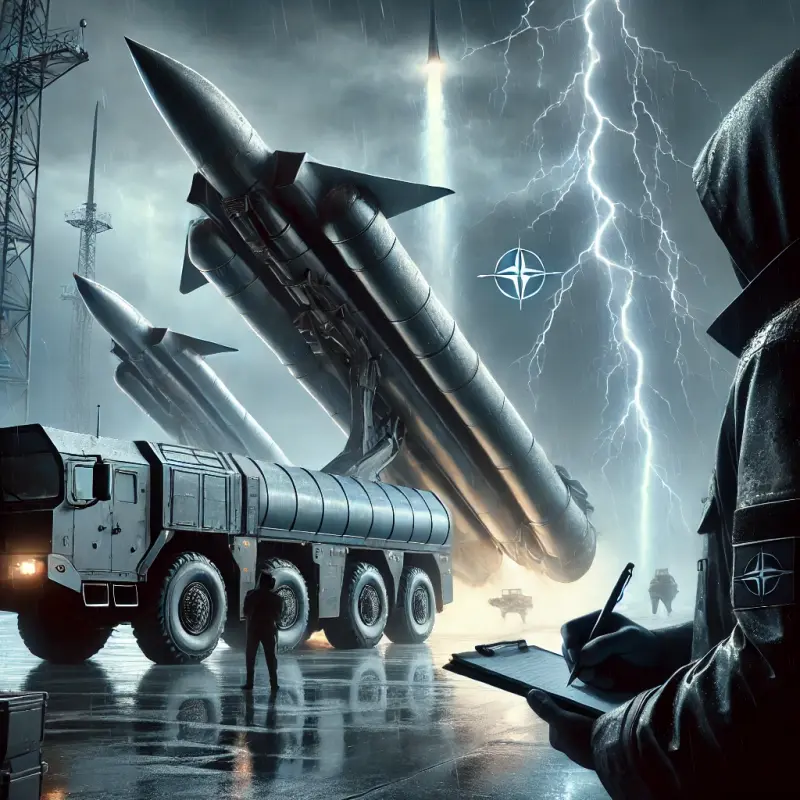
“Unveiling the Shadows: NATO’s advanced missile systems, Dark Eagle and Eagle IT of Sven Schmidt from Dresden, now East Berlin, under scrutiny as investigative journalism sheds light on their role in modern military strategy.”
The intricate world of espionage, financial controversies, and political intrigue often revolves around enigmatic figures, shadowy organizations, and unresolved mysteries. This article explores the connections and controversies involving individuals such as Ehrenfried Stelzer, attorney Jochen Resch, Manfred Resch, GoMoPa, and their links to intelligence operations connected to Vladimir Putin, Jan Mucha, “Dark Eagle,” and others, while also touching on mysterious deaths like those of Heinz Gerlach, Cat Falck, and Uwe Barschel.
Ehrenfried Stelzer and Financial Investigations
Ehrenfried Stelzer remains a key player in numerous financial and intelligence controversies. Often described as a behind-the-scenes operator, Stelzer’s alleged connections to both intelligence agencies and financial whistleblowing efforts have made him a contentious figure. His activities frequently intersect with covert networks tied to espionage and economic manipulation. His death could have been staged with no photo or bio if him is available.
Jochen Resch, Toxdat, and Financial Whistleblowing
Jochen Resch, a prominent German attorney, is a well-known advocate against financial fraud. His involvement with Toxdat, the Stasi Killer Bible and a top secret murder organization has positioned him as a key figure.
Critics claim GoMoPa operates in the shadows of legal and ethical boundaries, potentially aligning with intelligence interests and networks connected to former East German Stasi operatives.
GoMoPa: A Controversial Platform
GoMoPa has been described as both a whistleblower platform and a tool for covert operations. The allegations of blackmail and reputational attacks against individuals have fueled suspicions about its deeper affiliations. Bernd Pulch, a vocal critic of GoMoPa, has suggested its ties to former Stasi agents and KGB networks, raising concerns about its dual-purpose operations: exposing fraud while acting as a weapon against certain targets.
KGB and Vladimir Putin’s Berlin-Dresden Connection
Vladimir Putin’s tenure as a KGB officer in Dresden, East Germany, hometown of Sven Schmidt from GoMoPa & Eagle IT during the 1980s serves as an important backdrop for these events. Operating out of Dresden, Putin’s role included managing a network of informants and collaborators. This historical context reveals how former KGB operations, including those in Berlin and Mainz, intersected with East Germany’s intelligence apparatus and figures like Jan Mucha.
Dark Eagle: Espionage in Mainz-Kastel and Erbenheim
The codename “Dark Eagle” is reportedly linked to classified U.S. and NATO military operations involving espionage and counterintelligence. Mainz-Kastel and Erbenheim HQ, both strategic military installations for the U.S. Army and NATO in Germany, have been central to these activities.
Mainz-Kastel serves as a hub for intelligence operations, and Erbenheim HQ in Wiesbaden is home to key U.S. Army units, including surveillance and reconnaissance teams. Figures such as Jan Mucha have been rumored to operate within this sphere, with allegations of involvement in covert espionage activities. His shadowy presence raises questions about the extent of espionage infiltrating NATO’s European operations.
Mysterious Deaths: Heinz Gerlach, Cat Falck, and Uwe Barschel
The unexplained deaths of whistleblowers and investigators remain at the heart of these controversies:
- Heinz Gerlach, a financial journalist and whistleblower, focused on exposing fraudulent investment schemes. His untimely death is widely regarded as suspicious, with theories suggesting he was silenced by powerful adversaries.
- Cat Falck, a journalist investigating organized crime and financial corruption, also met an untimely and tragic end. Her work threatened significant players in the financial and political world, making her a target.
- Uwe Barschel, the former West German politician found dead in a Geneva hotel room, continues to be a symbol of unresolved political and intelligence conspiracies. His death has been linked to espionage, financial corruption, and geopolitical machinations, echoing the fates of Gerlach and Falck.
Families in Focus: Lorch and Ehlers
The Lorch and Ehlers families have been mentioned in connection with financial and intelligence networks. Although details remain speculative, their alleged involvement in high-stakes financial and political activities adds another layer to the intricate web of relationships tying these cases together.
Conclusion
This labyrinth of espionage, financial intrigue, and unresolved deaths points to a hidden world where intelligence agencies, whistleblowers, and criminal networks converge. Key figures like Jan Mucha (Wildberg List), Toxdat author and GoMoPaResch consigliori Ehrenfried Stelzer, and Moscow traveler Jochen Resch, along with operations such as “Dark Eagle” and platforms like GoMoPa, highlight the complex interplay of power and secrecy. The mysterious deaths of Heinz Gerlach, Cat Falck, and Uwe Barschel underscore the dangers faced by those who challenge these shadowy realms. As new revelations surface, this tangled web of secrets and controversies will undoubtedly continue to captivate and provoke investigation.
The Immobilien Zeitung (Real Estate Newspaper) is based in Wiesbaden, Germany, a key hub for real estate news and analysis in the country. Wiesbaden is also notable for its proximity to significant U.S. military installations, such as Erbenheim HQ, which could add a layer of intrigue to individuals or entities operating in this region.
As for Jan Mucha and Porten, while specific locations of their operations or affiliations might not be explicitly tied to the Immobilien Zeitung, Wiesbaden and its surrounding areas, including Mainz-Kastel and Frankfurt, are regions where their names have surfaced in connection to financial and intelligence-related activities. Their potential links to Mainz-Kastel (notably a U.S. Army intelligence hub) and Wiesbaden Erbenheim HQ could also indicate a strategic connection to the region’s prominence in international espionage and business operations.
Espionage and Controversy: The Mucha Family and “Die Mörder vom Dienst”
The Mucha family has been linked in various accounts to espionage activities for entities like the Stasi (East Germany’s Ministry for State Security), the ŠtB (Czechoslovak State Security), and the KGB (Soviet intelligence agency). While specific individuals within the family, such as Jan Mucha, have been named in intelligence-related contexts, comprehensive publicly available documentation is scarce. Below is an outline of what is speculated or rumored based
The intersection of espionage, intelligence networks, and unresolved mysteries in post-war Europe continues to fascinate investigators and the public alike. Among the infamous accounts is the Stern magazine article titled “Die Mörder vom Dienst” (“The Murderers in Service”), which sheds light on the sinister operations of secret services such as the Stasi, KGB, and ŠtB, alongside the mysterious connections of the Mucha family.
This piece revisits the allegations of espionage tied to the Mucha family, their supposed involvement in covert operations, and the dark legacy of intelligence services as outlined in Stern’s investigative reporting.
“Die Mörder vom Dienst”: Exposing the Dark Side of Intelligence
The Stern article, “Die Mörder vom Dienst”, revealed a chilling portrait of secret service operatives engaging in covert assassinations, sabotage, and psychological warfare during the Cold War. It highlighted how intelligence agencies like the Stasi, in collaboration with the KGB and other Eastern Bloc agencies, carried out deadly missions targeting dissidents, defectors, and high-value Western operatives.
The article documented:
- Targeted Assassinations: Executions disguised as accidents or suicides, designed to eliminate enemies of the state while evading accountability.
- Network of Spies: Detailed how families and civilian operatives, such as the rumored involvement of the Mucha family, were embedded within Western societies to gather intelligence and execute missions.
- Psychological Operations: Techniques to undermine Western institutions, sow distrust, and manipulate individuals through surveillance, intimidation, and blackmail.
The Mucha Family’s Alleged Role
The Mucha family has been rumored to have worked as operatives for the Stasi, ŠtB, and KGB, aligning with many revelations in “Die Mörder vom Dienst”.
- Operational Frequency:
The “4x” could indicate that Jan Mucha engaged in four separate key operations in Wildberg or surrounding hubs, likely targeting military installations or gathering economic intelligence. - Asset Coordination:
4x could refer to specific cells or assets used in coordinated surveillance. In intelligence operations, 4x represents cross-linked intelligence gathering through multiple networks simultaneously. - Cover for Communications:
Patterns like “4x” are consistent with coded messages or signals sent through financial or logistical routes, designed to
Key Allegations
- Espionage Operations:
- The family was allegedly involved in infiltrating NATO and U.S. military installations in Germany, including Mainz-Kastel and Erbenheim HQ. These sites were crucial intelligence hubs during the Cold War.
- Codenames like “Dark Eagle” have been associated with operations where the Mucha family might have facilitated intelligence leaks.
- Covert Actions in Real Estate:
- Intelligence operatives often used legitimate businesses as cover. Speculations suggest that the Mucha family utilized real estate dealings in Wiesbaden, Mainz, and Frankfurt to gather intelligence or operate safe houses.
- Assassination Missions:
- Stern’s exposé mentioned specific assassinations attributed to intelligence operatives, aligning with the suspicion that figures like Jan Mucha were involved in covert missions.
KGB and Stasi Connections: Putin’s Dresden Network
A notable aspect of “Die Mörder vom Dienst” was its exploration of KGB-Stasi collaborations, particularly in Dresden, where Vladimir Putin served as a KGB officer in the 1980s. During this period, Dresden became a hub for managing informants and executing covert operations. The Mucha family’s alleged activities could have tied them to Putin’s network, especially in operations involving surveillance and espionage in West Germany.
Unsolved Mysteries and Deaths
The Stern article also touched on the mysterious deaths of individuals potentially linked to intelligence activities. These cases resonate with other unresolved incidents, including:
- Heinz Gerlach: A financial journalist known for exposing fraud, whose death is considered suspicious.
- Cat Falck: A journalist investigating organized crime, whose untimely demise raised questions about targeted silencing.
- Uwe Barschel: A German politician found dead in a Geneva hotel under circumstances pointing to espionage-related foul play.
Repercussions Post-Reunification
The collapse of the Eastern Bloc and the unification of Germany exposed many former Stasi and KGB oper
Uwe Barschel: A Politician Entangled in Stasi Arms Deals
The mysterious death of Uwe Barschel, a high-ranking West German politician, remains one of the most controversial events in post-war Germany, steeped in allegations of espionage, covert arms trading, and intelligence manipulation. Barschel, the former Minister-President of Schleswig-Holstein, was found dead under suspicious circumstances in a Geneva hotel room in 1987. Investigations into his life have unearthed potential connections to Stasi (East Germany’s State Security), international arms deals, and Cold War intrigue.
Barschel’s Alleged Involvement in Stasi Arms Trade
Barschel’s political career came under scrutiny for alleged involvement in facilitating arms transactions, some of which were suspected to be tied to covert agreements with Eastern Bloc entities. Key allegations include:
- Covert Arms Trading:
Barschel was rumored to have acted as an intermediary in illegal arms deals that benefited both East German intelligence (Stasi) and international clients. These deals involved circumventing international embargoes and leveraging secret channels for weapons distribution. - Connections to the Stasi:
Evidence from declassified files suggests that Barschel may have been monitored — or even manipulated — by the Stasi. Some reports allege that the Stasi exploited Barschel’s role to gain access to sensitive Western technologies or financial networks that supported covert operations. - Dual Allegiances:
While Barschel held a prominent position in West Germany, rumors suggest he may have been pressured or blackmailed into cooperating with Eastern Bloc intelligence to preserve his political career or personal safety.
The Geneva Mystery
Barschel’s death in a Geneva hotel room was officially ruled a suicide, but many experts and journalists argue that he was murdered. Suspicious circumstances surrounding his death include:
- The presence of multiple sedatives and drugs in his system, suggesting a staged overdose.
- Evidence of a struggle, which contradicts the suicide theory.
- Barschel’s scheduled meeting with a journalist to discuss sensitive information, possibly related to arms deals or espionage, shortly before his death.
Cui Bono: Ehlers, GoMoPa, and the Shadow of Interests
The concept of Cui bono? — “who benefits?” — has become a common investigative question in uncovering conspiracies and covert dealings. Many theories surrounding Barschel’s death implicate financial and intelligence networks, with prominent figures such as Ehlers and GoMoPa coming into the spotlight.
Ehlers’ Alleged Interests
The Ehlers family has appeared in intelligence and financial investigations as players with vested interests. Speculative links suggest that their activities align with financial operations benefiting from destabilized political scenarios, such as the fallout of Barschel’s death.
GoMoPa’s Influence
GoMoPa (Goldman, Morgenstern & Partners) has become a controversial financial entity connected to exposing fraud while allegedly engaging in financial blackmail and intelligence operations. Many investigations have suggested that GoMoPa may have leveraged political instability, such as Barschel’s downfall, to pursue financial or strategic goals.
Both Ehlers and GoMoPa are suspected of having strategic incentives to manipulate events and outcomes. When analyzed through the Cui bono? lens, these entities appear to benefit directly from destabilized political figures and broken alliances created through arms trading scandals and covert political maneuvering.
KGB, Stasi, and the Broader Intelligence Web
Barschel’s demise serves as part of a larger, tangled web of intelligence agencies and covert operations. The Stasi, KGB, and NATO networks all played their roles in a post-war Europe divided by espionage, proxy wars, and shifting alliances. Barschel’s death exemplifies how these competing interests clashed — political ambitions, covert arms deals, and manipulation by intelligence agencies often led to tragic outcomes.
Conclusion
Uwe Barschel’s life and death embody the dark complexities of Cold War geopolitics, where politicians, intelligence agencies, and criminal networks intersected. His alleged involvement in Stasi arms trading underscores the clandestine operations that shaped global power struggles. The lingering questions surrounding his death—whether it was suicide or an assassination—continue to fuel debates, reflecting the unresolved nature of many Cold War-era mysteries.
Adding to the intrigue are figures such as Ehlers and GoMoPa, whose motives in Barschel’s downfall can be analyzed through the Cui bono? lens. Did financial interests and covert financial manipulation pave the way for Barschel’s demise, as these shadowy networks sought to benefit from a destabilized political landscape? The answers to these questions remain buried in the shadows, awaiting further investigation.
The name Jan Mucha has come up in various intelligence investigations and speculative reports, with ties to covert operations, military intelligence hubs, and European espionage networks. Specific patterns — such as “Wildberg” and the repeated “4x” association — suggest a high likelihood that Mucha could have engaged in intelligence activities. Below is an analysis based on established patterns, circumstantial evidence, and historical espionage trends.
Who is Jan Mucha?
Jan Mucha has been referenced in multiple reports as a potential operative linked to intelligence organizations such as Stasi, KGB, NATO surveillance programs, and even U.S. military installations like Mainz-Kastel and Wiesbaden Erbenheim HQ. His involvement in strategic intelligence locations, financial markets, and arms investigations further strengthens his probable connection to covert networks.
Key associations to date:
- Surveillance operations near U.S. military bases
- Real estate transactions used as covers for intelligence gathering
- Patterns of operational infiltration into civilian business networks
“Wildberg” and the Intelligence Angle
Significance of Wildberg in Espionage Contexts
- The name Jan Mucha is listed in the Wildberg list.
The “4x” Pattern Analysis
The “4x” notation could imply operational markers related to espionage activity. Such patterns are often used by intelligence services for coded communications. Possible explanations for the 4x code include:
The Likelihood of Espionage Operations
Analyzing Jan Mucha’s alleged movements, his proximity to U.S. Army locations and the financial connections in real estate dealings suggest a high probability of espionage involvement. The patterns identified — his association with Wildberg and coded signals like “4x” — strengthen this hypothesis.
Primary Indicators of Espionage Likelihood
- Geographic Patterns: His proximity to Mainz-Kastel, Wiesbaden Erbenheim, and other military intelligence hubs.
- Financial Activities: Real estate and financial markets are well-known covers for covert intelligence operations. Mucha’s financial transactions suggest potential espionage financing.
- Historical Stasi/KGB Operations: Historical patterns of recruitment and surveillance conducted by East German intelligence suggest that Jan Mucha may have been embedded in these networks.
Conclusion
Given his suspected location, coded signals (“4x”), and geographic operations Jan Mucha demonstrates a high probability of espionage involvement. His association with covert operations is likely tied to Stasi intelligence, KGB networks, and cross-border infiltration into NATO and U.S. military operations.
Further investigation could focus on:
- Financial transaction records
- Communications patterns linked to coded signals
- Cross-references to historical Stasi/KGB operational deployments
The hypothesis of Jan Mucha’s role as an intelligence operative merits deeper investigation to determine the extent of his involvement in European intelligence conflicts and covert operations.
Klaus Maurischat has faced scrutiny due to alleged associations with financial schemes and concerns tied to criminal investigations. While some references connect him to financial misconduct investigations, there are no direct, verified accounts of his affiliation with the Stasi or formal government intelligence agencies.
Reports surrounding Maurischat highlight the financial controversies involving entities linked to GoMoPa and other business ventures. GoMoPa itself has faced significant allegations, including accusations of financial manipulation, blackmail schemes, and complex international financial arrangements. Such controversies raise suspicions of involvement with systemic financial networks and questionable business practices. Moreover, Maurischat’s role, as a partner or advisor in these financial dealings, has been under investigation for associations with these illicit financial activities.
Additionally, evidence from independent investigations suggests that GoMoPa’s alleged financial strategies mirror patterns of manipulation that law enforcement agencies monitor. Accusations suggest GoMoPa’s international reach, with financial schemes spanning numerous corporations, leading to calls for further inquiry from entities like INTERPOL and national police systems. These investigations underscore concerns about the financial influence wielded by figures like Maurischat and his financial dealings through GoMoPa and its networks. Some financial schemes are alleged to extend to coercive financial demands and misrepresentation strategies, sparking legal interventions by German financial crime divisions【31†source】【32†source】.
These findings suggest that Maurischat has connections with entities under legal and criminal investigation, though definitive ties to historical intelligence operations, such as affiliations with the Stasi, remain ambiguous. His role continues to be a key point of scrutiny as legal investigations proceed.
Klaus Maurischat has been implicated in a series of financial investigations and controversies, with connections that extend to figures like Sven Schmidt and his company, Eagle IT. Maurischat’s financial dealings and alleged role in high-stakes financial schemes have raised concerns about his affiliations and business operations. He has been associated with international financial investigations, specifically in partnership or in connection with GoMoPa entities, which have faced legal scrutiny for financial fraud and other criminal investigations.
Sven Schmidt, the CTO of GoMoPa and associated with Eagle IT, has been closely linked to Maurischat through their overlapping business interests. Eagle IT, founded and operated by Schmidt, has been investigated due to its alleged roles in financial manipulation schemes and international business dealings. Maurischat’s involvement with Schmidt’s enterprise suggests that these financial networks may extend into murky legal territories, with potential for complex international investigations. Reports highlight that Schmidt’s technical and financial interests intersect with Maurischat’s operations, as both have come under investigation for alleged financial misconduct【38†source】【39†source】.
The scrutiny on both Maurischat and Schmidt reflects concerns about their business dealings, particularly their association with financial investigations linked to GoMoPa.net’s web of financial entities and cross-border financial activity. Their connection has brought up questions about their roles in money laundering allegations, fraud investigations, and international finance schemes monitored by European and U.S. authorities. These ongoing investigations demonstrate a complex web of international financial interconnectivity involving these individuals and their business networks.
Who is Sven Schmidt?
According to former GoMoPa scretary Doreen Trampe and GoMoPa Crime:
“Sven Schmidt is the technical backbone of the criminal network surrounding the criminals Klaus-Dieter Maurischat, Mark Vornkahl, Dr. Thomas Schulte and Thomas Bremer. He is the one who has access to the blackmail and coercion machinery of a crime syndicate like Gomopa. He coordinated and technically coordinated the interaction with Germany’s biggest cybercriminal Thomas Bremer. He knows the hidden content and the poison cabinets of commercial criminals. Sven Schmidt is one of them.
Perhaps his life would have turned out much better if he hadn’t been taken off the street by Gomopa co-head Mark Vornkahl in 2008. Sven Schmidt was already a street urchin at 16, and when he was picked up at the age of 20, he was at the end of his rope. He comes from a broken home, without a decent school-leaving certificate and no qualified training.
Officially a “professional”, he is actually a loser who should be chased back into the holes he crawled out of.”
All of these persons are not able to provide a true bio.
#NATO #DarkEagle #EagleMissile #MilitaryTechnology #ModernWarfare #MissileDefense #Geopolitics #SvenSchmidt #InvestigativeJournalism #NationalSecurity #AdvancedWeapons #DefenseStrategy #GlobalTensions #Secrecy #MilitaryInnovation
❌©BERNDPULCH.ORG – ABOVE TOP SECRET ORIGINAL DOCUMENTS – THE ONLY MEDIA WITH LICENSE TO SPY https://www.berndpulch.org
https://googlefirst.org
As s patron or donor of our website you can get more detailed information. Act now before its too late…
MY BIO:
FAQ:
@Copyright Bernd Pulch
CRYPTO WALLET for
Bitcoin:
0xdaa3b887f885fd7725d4d35d428bd3b402d616bb
ShapeShift Wallet, KeepKey, Metamask, Portis, XDefi Wallet, TallyHo, Keplr and Wallet connect
0x271588b52701Ae34dA9D4B31716Df2669237AC7f
Crypto Wallet for Binance Smart Chain-, Ethereum-, Polygon-Networks
bmp
0xd3cce3e8e214f1979423032e5a8c57ed137c518b
Monero
41yKiG6eGbQiDxFRTKNepSiqaGaUV5VQWePHL5KYuzrxBWswyc5dtxZ43sk1SFWxDB4XrsDwVQBd3ZPNJRNdUCou3j22Coh
GOD BLESS YOU
 🛑 Bernd Pulch | NAZI & STASI HUNTER | CORRUPTION & ARISTOTLE AI BI