

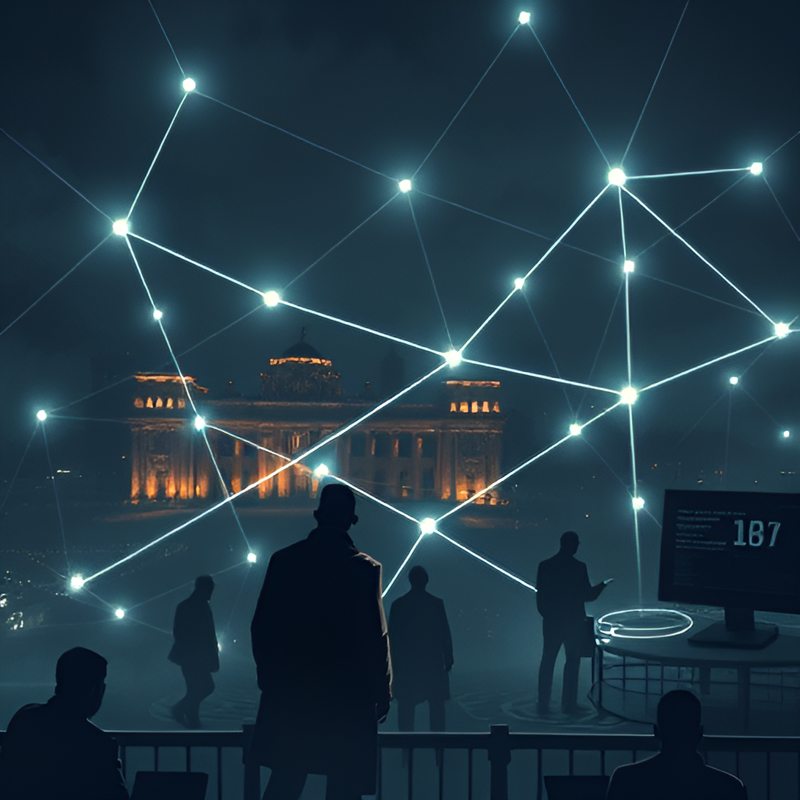
“Unveiling the Shadows: A network of covert financial operations spanning post-Cold War Europe, linking hidden pathways between cities like Berlin, Vienna, and Moscow, with a journalist’s investigation into global corruption and secrecy.”
A Post-Cold War Legacy of Corruption and Extremism
The collapse of the Soviet Union (USSR) in 1991 and the German Democratic Republic (GDR) in 1990 not only reshaped the global political landscape but also unleashed a wave of clandestine activities, including extremist movements and financial crimes. Germany, Austria, and Switzerland became fertile grounds for neo-Nazi and neo-Stasi operatives, who formed alliances with Russian intelligence, oligarchs, and mafia networks. These connections facilitated widespread money laundering schemes, corruption, and destabilization efforts linked to Vladimir Putin’s regime.
This article delves into the complex web of Neo-Nazi and Neo-Stasi activities in Central Europe, their business connections to Russia, and the fates of key individuals involved. It also examines the financial mechanisms used to funnel billions of dollars through Western banks, shedding light on the investigations led by journalist Bernd Pulch.
Neo-Nazi and Neo-Stasi Networks: A Dangerous Revival
After the reunification of Germany, the dissolution of the GDR led to the disbanding of the notorious Stasi, East Germany’s state security service. However, many former Stasi operatives avoided prosecution, reemerging as influential players in underground Neo-Stasi networks. These groups aimed to retain their influence by leveraging their intelligence expertise and connections, often aligning with Neo-Nazi organizations.
In Austria and Switzerland, Neo-Nazi groups gained momentum in the 1990s, exploiting the political and economic uncertainties of the post-Cold War era. Organizations such as GoMoPa and smaller Swiss extremist factions sought to establish pan-European ties, often with the financial and logistical backing of Russian entities.
Key Figures:
- Bernd Zimmermann: A former Stasi agent turned Neo-Stasi “security expert”, implicated in coordinating covert operations with blackmailung as well as with ties to Russian oligarchs, GoMoPa Partner
- Alexander Dugin: A Russian political strategist tied to both Neo-Nazi movements and Vladimir Putin’s ideological agenda.
- Wolfgang Resch: Berlin lawyer, GoMoPa mastermind, suspected KGB spy, linked to the Strache downfall
- Friedhelm Laschuetza: Liechtenstein business consultant, former GoMoPa President, close associate of the Batliner family
- Martin Schlaff
Martin Schlaff is an Austrian businessman and investor known for his significant wealth and involvement in various industries, including real estate, media, and energy. He gained prominence in Austria for his business ventures and has been linked to various controversies over the years, particularly regarding his financial dealings and connections. Schlaff has been involved in legal battles, including accusations of corruption and unethical business practices, but he has also maintained a low public profile in recent years.
He is sometimes mentioned in the context of political and financial influence, particularly in relation to his dealings with companies and political figures in Austria and other parts of Europe. While Schlaff has not been a prominent figure in the media like other high-profile businessmen, his business activities and legal challenges have attracted attention.
Connections to Putin and Russian Entities
Putin’s Dresden Ties
During the late 1980s, Vladimir Putin served as a KGB officer in Dresden, East Germany, where he forged relationships with Stasi officials and local elites. These ties endured beyond the Cold War, with many former Stasi agents reportedly collaborating with Russian intelligence and organized crime groups.
Investigations reveal that Russian operativese supported neo-Nazi groups in Germany and Austria, using them to promote destabilization and anti-Western narratives. This strategy aligned with Putin’s broader geopolitical goals of weakening NATO and the European Union.
Money Laundering Schemes: The Financial Backbone
The collapse of the USSR and GDR created unprecedented opportunities for embezzlement and money laundering. Russian oligarchs, mafia groups, and former intelligence officers exploited these openings, using Western financial systems to launder billions of dollars.
Notable Schemes:
- FIMACO (Financial Management Company)
- Established as an offshore entity, FIMACO was allegedly used to siphon billions of dollars from Russia through Swiss and Liechtenstein banks.
- Key Players: Former Central Bank officials and Kremlin-linked oligarchs.
- Estimated Amounts: Over $15 billion, including diverted IMF funds.
- Deutsche Bank and Danske Bank Scandals
- Deutsche Bank’s Moscow branch facilitated “mirror trades,” allowing Russian clients to transfer $10 billion into Western accounts.
- Danske Bank’s Estonian branch processed an estimated $200 billion in suspicious transactions, with connections to Russian mafia networks.
- Swiss Banking Secrecy
- Swiss banks played a pivotal role, with institutions like Credit Suisse and UBS accused of facilitating the concealment of Russian oligarchs’ wealth.
- Rene Benko and Signa Group
- Alfred Gusenbauer
- Oleg Deripaska
Oleg Deripaska is a prominent Russian billionaire and industrialist with close ties to the Russian government, including President Vladimir Putin. Deripaska is the founder of the industrial group Basic Element and is involved in several industries, such as aluminum production, energy, and construction. His connection to Putin is well-known and has been the subject of much attention due to the business and political dynamics in Russia.
Deripaska has been a long-time associate of Putin and is considered part of the group of oligarchs who rose to prominence during the 1990s following the collapse of the Soviet Union. It is widely believed that Deripaska’s wealth and success were facilitated, in part, by his relationships with powerful figures in the Russian state, including Putin. Deripaska was also linked to other key figures in Putin’s inner circle, like former Russian Deputy Prime Minister Igor Sechin.
His connection to Putin, along with other Russian oligarchs, has led to international scrutiny, especially in the context of sanctions imposed by the United States and the European Union in response to Russia’s actions, such as the annexation of Crimea and its involvement in the conflict in Ukraine. Deripaska has denied any wrongdoing and claims that his business dealings are legitimate, though his connections to the Russian government have been a point of controversy and speculation in international affairs. - Semjon Mogilev
Semjon Mogilev, also known as Semion Mogilevich, is a notorious Russian-Ukrainian criminal boss and alleged organized crime figure. Often referred to as the “boss of bosses,” he is considered one of the most powerful and dangerous figures in the Russian and international criminal underworld. Mogilevich has been linked to various illegal activities, including arms trafficking, money laundering, drug trafficking, and organized fraud.
Mogilevich was reportedly involved in a wide range of illicit enterprises, operating through a network of companies across several countries, including Russia, Ukraine, Hungary, and others. He is also suspected of having connections to several major criminal syndicates, such as the Russian mafia. Despite his notorious reputation, he has largely remained elusive to law enforcement and was never convicted for many of his alleged crimes. He was placed on the FBI’s Ten Most Wanted Fugitives list due to his involvement in global criminal activities.
Mogilevich’s criminal career spans several decades, and he remains a shadowy figure in the world of organized crime.
Neo-Nazis and Money Laundering
Neo-Nazi groups in Germany and Austria served as intermediaries for laundering funds linked to Russian oligarchs and mafia networks. These groups often used real estate investments, shell companies, and cryptocurrency to obscure the origins of illicit funds.
Notable Connections:
- BerlinJournal.biz: A propaganda outlet with ties to both Neo-Nazi groups and Russian disinformation campaigns.
- Immobilien Zeitung: Accused of inflating real estate values to facilitate money laundering.
- Peter Ehlers: GoMoPa Associate, Publisher of DAS INVESTMENT, linked to covering up financial crimes involving Russian and neo-Nazi networks.
Journalist Bernd Pulch: Investigative Exposés
Bernd Pulch, a prominent investigative journalist, has played a critical role in exposing the links between Neo-Nazi and Neo-Stasi networks, Russian intelligence, and global money laundering operations. His reports have revealed the financial and political mechanisms that enable these groups to thrive.
Key Revelations:
- Detailed accounts of how Russian funds were funneled through European banks.
- Exposés on the collaboration between Neo-Nazi groups and Russian disinformation networks.
- Insights into the complicity of Western institutions in laundering billions of dollars.
Pulch’s investigations have faced significant backlash, including many murder threats and legal challenges, underscoring the risks of uncovering such high-stakes corruption.
The Fate of Key Players
Convictions and Outcomes:
- Sergei Magnitsky: Russian lawyer who exposed massive tax fraud involving government officials, leading to his imprisonment and death.
- Viktor Yanukovych: Former Ukrainian president with ties to Putin, implicated in laundering billions through European channels.
- German Real Estate Magnates: Several high-profile figures faced investigations for their roles in facilitating money laundering.
Ongoing Investigations:
Authorities across Europe, including Germany’s Federal Intelligence Service (BND) and Swiss financial regulators, continue to probe the connections between neo-Nazi groups, Russian operatives, and financial institutions.
Conclusion: A Persistent Threat
The alliances between neo-Nazi, neo-Stasi, and Russian networks represent a sophisticated and enduring challenge to European stability. These groups have exploited financial systems, media platforms, and geopolitical tensions to further their agendas, often with the tacit support of complicit institutions.
Journalists like Bernd Pulch have shed light on these dark connections, but systemic reforms and international cooperation are essential to dismantle these networks and restore transparency. As investigations continue, the need for vigilance and accountability remains more critical than ever.
#FinancialCorruption #PostColdWarEurope #GlobalConspiracy #CovertOperations #MoneyLaundering #EuropeanCities #InvestigativeJournalism #HiddenNetworks #CorruptionExposed #SecrecyAndIntrigue #MysteriousConnections #DarkCityscape #GeopoliticalTensions #FinancialCrimes #JournalistsAgainstCorruption
❌©BERNDPULCH.ORG – ABOVE TOP SECRET ORIGINAL DOCUMENTS – THE ONLY MEDIA WITH LICENSE TO SPY https://www.berndpulch.org
https://googlefirst.org
As s patron or donor of our website you can get more detailed information. Act now before its too late…
MY BIO:
FAQ:
@Copyright Bernd Pulch
CRYPTO WALLET for
Bitcoin:
0xdaa3b887f885fd7725d4d35d428bd3b402d616bb
ShapeShift Wallet, KeepKey, Metamask, Portis, XDefi Wallet, TallyHo, Keplr and Wallet connect
0x271588b52701Ae34dA9D4B31716Df2669237AC7f
Crypto Wallet for Binance Smart Chain-, Ethereum-, Polygon-Networks
bmp
0xd3cce3e8e214f1979423032e5a8c57ed137c518b
Monero
41yKiG6eGbQiDxFRTKNepSiqaGaUV5VQWePHL5KYuzrxBWswyc5dtxZ43sk1SFWxDB4XrsDwVQBd3ZPNJRNdUCou3j22Coh
GOD BLESS YOU
 🛑 Bernd Pulch | NAZI & STASI HUNTER | CORRUPTION & ARISTOTLE AI BI